Why My Tongue White? Causes, Symptoms & Care 2026
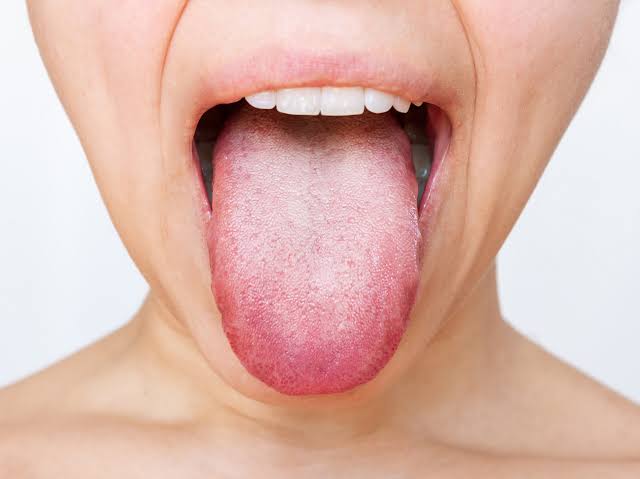
Why my tongue white — this is one of the most common questions people ask when they look in the mirror and notice a strange coating on their tongue. It can look alarming at first glance, but in most cases it is not a reason to panic.
A white tongue happens when bacteria, dead cells, and food debris get trapped between the tiny bumps on your tongue, called papillae. This buildup creates a pale or chalky film that can cover part or all of the tongue’s surface.
Quick Facts About White Tongue
Before we go deep into causes and treatment, here is a quick snapshot of what research and dental experts commonly report about white tongue cases.
Most cases of white tongue are linked to poor oral hygiene or mild dehydration, not a serious disease.
Oral thrush, caused by an overgrowth of Candida yeast, is one of the leading medical causes of a thick white coating.
Smokers and people who breathe through their mouth at night are more likely to develop a coated tongue.
Leukoplakia, a condition linked to tobacco and alcohol use, cannot be scraped off and needs a professional check.
Most mild cases clear up within one to two weeks with better hydration and tongue cleaning.
Table: White Tongue Snapshot
| Factor | Detail |
|---|---|
| Common Cause | Bacteria, dead cells, and food debris trapped in papillae |
| Main Risk Groups | Smokers, mouth breathers, people with dry mouth |
| Usual Duration | 1–2 weeks for mild cases |
| Serious Signs | Pain, patches that don’t scrape off, lasts over 2 weeks |
| Home Fix | Tongue scraping, hydration, better oral hygiene |
What Does a White Tongue Mean?
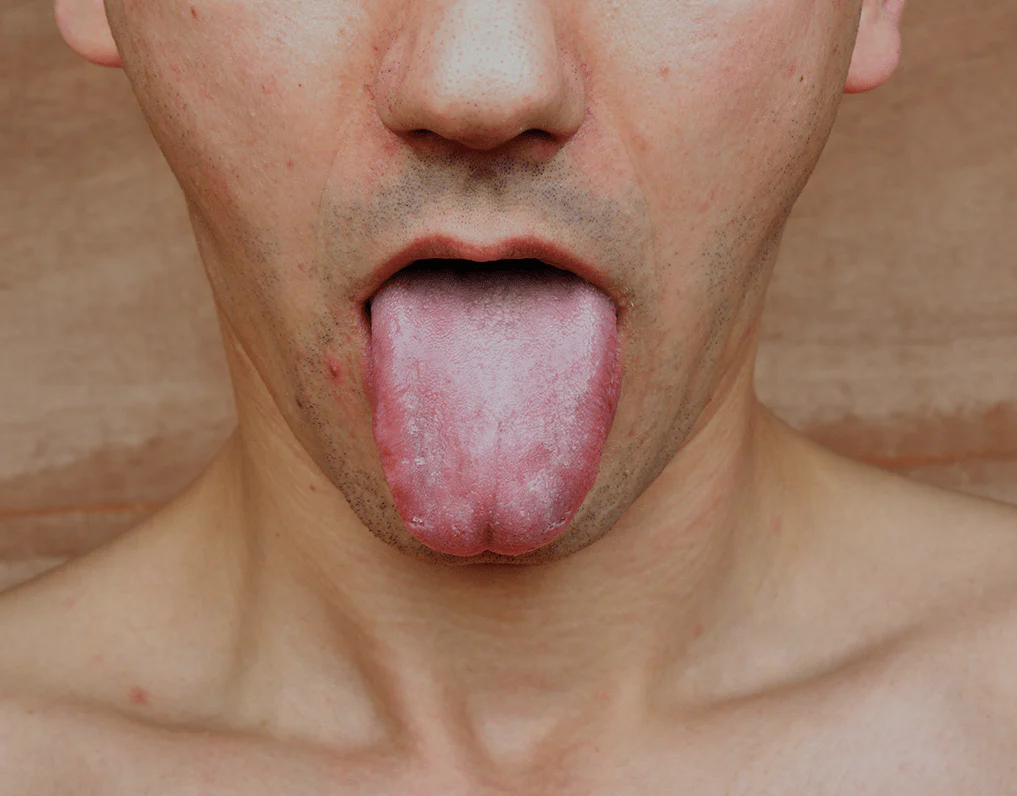
A white tongue is simply a thick, pale film sitting on the surface of your tongue. It can appear as a full coating or as small patches.
The tongue’s surface is covered with tiny finger-like structures called papillae. When these papillae become inflamed or swollen, they trap bacteria and debris more easily.
This trapped material is what creates the white appearance. In most people, this is harmless and temporary, similar to plaque building up on teeth.
However, a white tongue can sometimes be a signal from your body that something else needs attention, such as an infection or a nutrient deficiency.
Common Causes of a White Tongue
There isn’t just one reason your tongue turns white. Several lifestyle habits and medical conditions can lead to this same visible symptom.
Below are the most frequently reported causes, based on dental and medical sources, along with what makes each one different.
Poor Oral Hygiene
Not brushing your tongue along with your teeth allows food particles and bacteria to build up quickly.
Over a few days, this buildup thickens and turns into a visible white layer across the tongue’s surface.
Dehydration and Dry Mouth
Saliva plays a major role in washing away bacteria and keeping your mouth clean throughout the day.
When saliva production drops due to dehydration, medication, or mouth breathing, debris sticks to the tongue more easily.
Mouth Breathing
Breathing through your mouth, especially while sleeping, dries out the tongue and reduces the natural cleaning action of saliva.
This is a very common cause in people who snore or have nasal congestion at night.
Smoking and Tobacco Use
Smoking irritates the tongue’s surface and reduces saliva flow, both of which encourage a white coating to form.
Long-term tobacco use is also linked to more serious tongue conditions, which we will cover shortly.
Oral Thrush (Candida Infection)
Oral thrush is caused by an overgrowth of Candida, a yeast that naturally lives in your mouth in small amounts.
It often appears as thick, white, cottage-cheese-like patches on the tongue and inner cheeks, and it is more common in people with weakened immunity.
Leukoplakia
Leukoplakia causes white or grayish patches that cannot be scraped off with a toothbrush or tongue scraper.
It is often linked to chronic irritation from tobacco or alcohol and should always be checked by a dental professional.
Oral Lichen Planus
This is a chronic inflammatory condition that creates white, lace-like patterns on the tongue, gums, or inner cheeks.
It is believed to be related to immune system activity rather than infection or poor hygiene.
Geographic Tongue
Geographic tongue creates irregular white-bordered patches with red centers that can shift location over time.
It is usually harmless, may be linked to genetics or stress, and does not require treatment unless it causes discomfort.
Medications and Antibiotics
Certain antibiotics can disturb the natural bacterial balance in your mouth, allowing yeast or bacteria to overgrow.
Inhaled steroids used for asthma can also contribute to a white-coated tongue if the mouth isn’t rinsed afterward.
Rare but Serious Causes
In rare cases, a persistent white tongue can be linked to syphilis or, even more rarely, to early signs of oral cancer.
These cases are uncommon, but they are exactly why a white tongue that doesn’t improve should never be ignored.
Table: Causes and Their Typical Signs
| Cause | Typical Appearance | Scrapable? |
|---|---|---|
| Poor hygiene | Thin to moderate white film | Yes |
| Dehydration | Pale, dry-looking coating | Yes |
| Oral thrush | Thick, cottage-cheese patches | Partially, may bleed |
| Leukoplakia | Firm white or gray patches | No |
| Oral lichen planus | Lace-like white lines | No |
| Geographic tongue | Red patches with white borders | No |
Symptoms That Often Come With a White Tongue
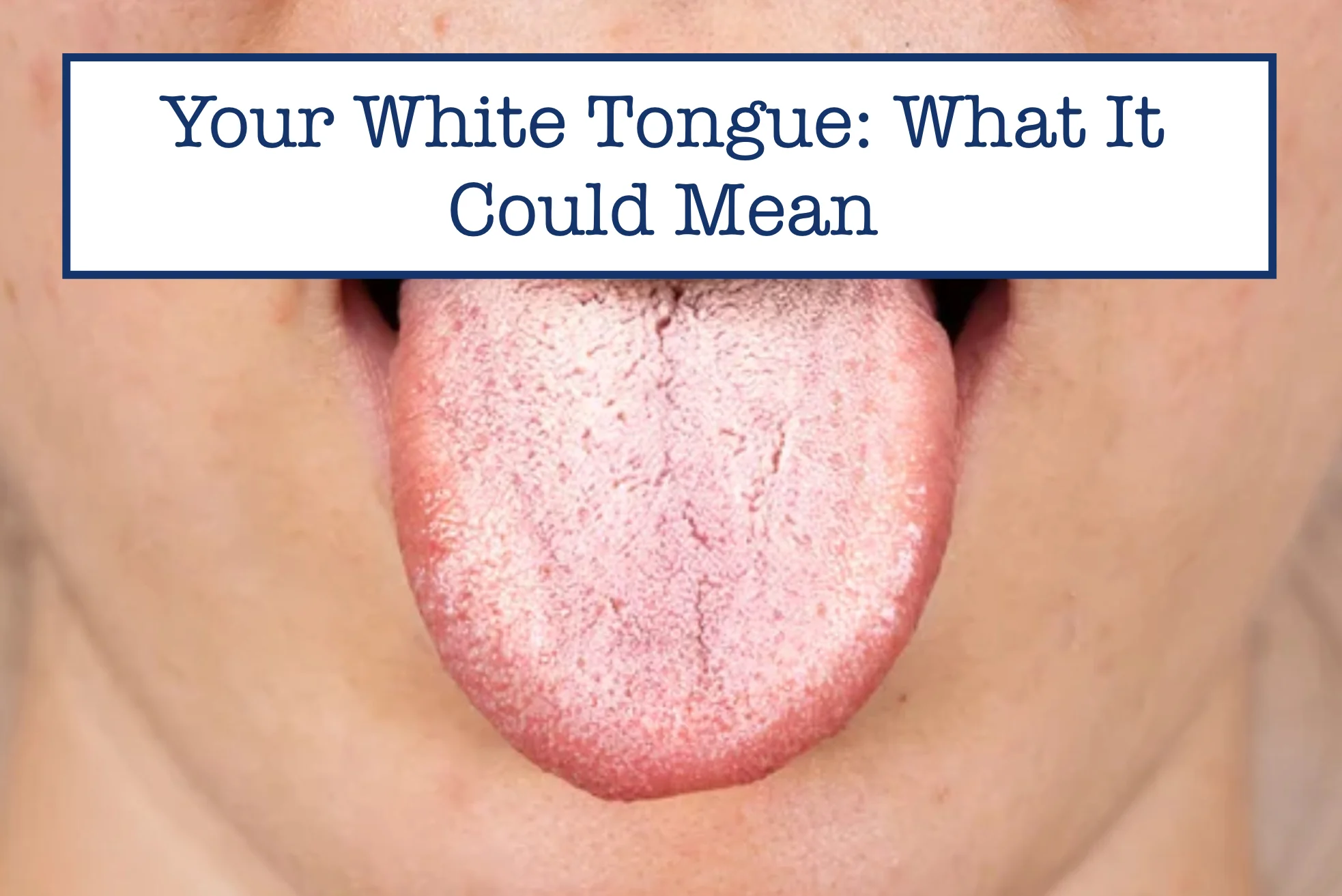
A white tongue rarely shows up completely alone. Watching for accompanying symptoms helps you understand how serious the situation might be.
Bad breath is one of the most common companions, since bacteria buildup produces an unpleasant odor.
A burning or sore sensation on the tongue can point toward oral thrush or lichen planus rather than simple debris buildup.
Loss of taste or a metallic taste sometimes occurs when the papillae are heavily coated or inflamed.
Dry mouth, cracked lips, or a rough tongue texture usually accompanies white tongue caused by dehydration or mouth breathing.
Red or bleeding patches underneath the white coating can be a sign of a more serious underlying condition.
Is a White Tongue Serious?
For the vast majority of people, a white tongue is not serious and clears up on its own with better hydration and hygiene.
It becomes more concerning when the coating is thick, painful, does not scrape off, or lasts longer than two weeks.
Persistent white patches, especially in smokers or heavy drinkers, deserve a professional evaluation to rule out leukoplakia or precancerous changes.
If you also notice fever, difficulty swallowing, or spreading white patches, this could point toward an active infection needing treatment.
When to See a Doctor or Dentist
You do not need to worry about every white coating you notice, but certain signs mean it’s time to book an appointment.
See a professional if the white coating lasts more than two to three weeks despite home care.
Seek care if you notice pain, bleeding, swelling, or patches that will not scrape off with gentle brushing.
A dentist visit is also wise if the white tongue appears alongside fever, mouth sores, or difficulty eating.
People with diabetes, weakened immune systems, or recent antibiotic use should get checked sooner rather than later.
How to Get Rid of White Tongue at Home
Most mild cases of white tongue respond very well to simple changes in your daily routine.
Start by gently cleaning your tongue every morning using a tongue scraper or a soft-bristled toothbrush.
Use light pressure only. Scrubbing too hard can damage the papillae and irritate your tongue further.
Drink plenty of water throughout the day to keep saliva flowing and wash away trapped bacteria.
Rinse your mouth with warm salt water once or twice daily to reduce bacteria and soothe irritation.
Cut back on smoking and alcohol, since both dry out the mouth and worsen tongue coating.
Brush your teeth twice daily and floss regularly, since oral hygiene habits directly affect tongue health.
Try breathing through your nose instead of your mouth, especially while sleeping, to prevent dryness overnight.
Table: Home Remedies at a Glance
| Remedy | How It Helps | Frequency |
|---|---|---|
| Tongue scraping | Removes trapped debris and bacteria | Once daily |
| Salt water rinse | Reduces bacteria and soothes tissue | 1–2 times daily |
| Hydration | Boosts saliva flow | Throughout the day |
| Quit smoking | Reduces irritation and dryness | Ongoing |
| Nasal breathing | Prevents overnight dry mouth | Nightly |
Medical Treatments for White Tongue
When home care isn’t enough, a doctor or dentist may recommend treatment based on the underlying cause.
Oral thrush is usually treated with antifungal medication, available as a liquid, gel, lozenge, or pill form.
Oral lichen planus that doesn’t resolve on its own may be treated with steroid mouthwashes or topical steroid sprays.
Leukoplakia patches are monitored closely, and in some cases, a small biopsy is taken to rule out precancerous cells.
If a medication is causing dry mouth, your doctor might adjust the dosage or suggest a saliva-boosting alternative.
Syphilis, though rare as a cause, is treated effectively with antibiotics under a doctor’s supervision.
How to Prevent White Tongue
Prevention is often easier than treatment, and small daily habits make a big difference over time.
Clean your tongue every time you brush your teeth, using a scraper or your toothbrush’s built-in tongue cleaner.
Stay hydrated throughout the day, especially if you exercise, live in a hot climate, or take medications that dry your mouth.
Avoid smoking and limit alcohol, since both are major contributors to a persistently coated tongue.
Treat nasal congestion or allergies promptly, since a blocked nose often leads to mouth breathing at night.
Schedule regular dental checkups so any early changes in your tongue’s appearance are caught quickly.
Table: Prevention Checklist
| Habit | Why It Matters |
|---|---|
| Daily tongue cleaning | Removes buildup before it thickens |
| Adequate water intake | Keeps saliva flow steady |
| Limiting tobacco and alcohol | Reduces irritation and dryness |
| Treating nasal blockage | Prevents mouth breathing at night |
| Routine dental visits | Catches problems early |
White Tongue vs Other Tongue Colors
Your tongue’s color can tell you a lot, and white is just one of several shades worth knowing about.
A healthy tongue is usually pink with a thin, even texture and small visible papillae.
A yellow tongue often points to bacterial buildup, smoking, or mild dehydration, similar to white tongue but slightly further along.
A black or dark tongue, sometimes called black hairy tongue, happens when papillae grow longer and trap stains from food, coffee, or tobacco.
A red or strawberry-colored tongue can signal a vitamin deficiency, scarlet fever, or in rare cases, Kawasaki disease in children.
Table: Tongue Color Guide
| Tongue Color | Possible Meaning |
|---|---|
| Pink | Healthy, normal tongue |
| White | Buildup, dehydration, thrush, or leukoplakia |
| Yellow | Bacteria buildup, smoking, mild dehydration |
| Black or dark | Black hairy tongue, staining, tobacco use |
| Red or strawberry | Vitamin deficiency, fever-related conditions |
Diet and Its Role in White Tongue
What you eat and drink has a direct effect on the bacteria living in your mouth and on your tongue.
High-sugar diets feed bacteria and yeast, making a white coating more likely to form and stick around.
Low water intake reduces saliva production, which slows down your mouth’s natural self-cleaning process.
Eating crunchy fresh produce, like apples, celery, and carrots, provides light natural friction that helps clean the tongue’s surface while you chew.
Probiotic foods such as plain yogurt may help balance the bacteria in your mouth and support a healthier tongue.
Limiting alcohol-based mouthwashes is also helpful, since they can dry out the mouth and irritate an already sensitive tongue.
Table: Foods That Help vs Foods That Worsen White Tongue
| Helpful Foods | Foods to Limit |
|---|---|
| Water-rich fruits (watermelon, oranges) | Sugary snacks and sodas |
| Crunchy vegetables (carrots, celery) | Alcohol and alcohol-based mouthwash |
| Plain yogurt (probiotics) | Highly processed, sticky foods |
| Green tea | Excess coffee without water follow-up |
White Tongue in Children vs Adults
White tongue looks similar in children and adults, but the common causes can differ quite a bit between the two groups.
In babies, a white tongue is often just leftover milk residue, which can be gently wiped away with a soft, damp cloth.
If the white coating in a baby does not wipe away easily, it could be oral thrush, which is common in infants and needs a pediatrician’s check.
In older children and adults, poor hygiene, mouth breathing, and dehydration are the most frequent explanations.
Adults who smoke, drink alcohol regularly, or take certain medications face a higher chance of developing leukoplakia or thrush compared to children.
Related Searches and Terms Worth Knowing
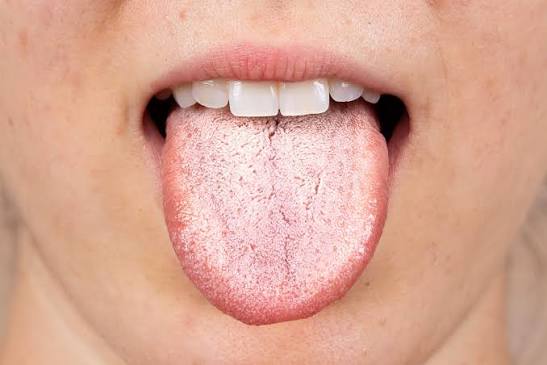
People searching for “why my tongue white” often also look up closely related terms while trying to understand their symptoms.
These include white tongue causes, white tongue treatment, white tongue std, white tongue diabetes, geographic tongue, black hairy tongue, and oral thrush symptoms.
Understanding these related terms can help you describe your symptoms more accurately if you decide to see a doctor or dentist.
It also helps you search for the right information instead of assuming every white coating means the same thing.
Myths vs Facts About White Tongue
There is a lot of confusing information online about white tongue, so it helps to separate common myths from the facts.
Myth: A white tongue always means poor hygiene. Fact: while hygiene is a common cause, dehydration, medications, and infections play a role too.
Myth: You should scrub your tongue as hard as possible. Fact: aggressive scraping can damage papillae and make irritation worse.
Myth: White tongue always needs medication. Fact: most mild cases clear up with simple home care and better hydration.
Myth: Only smokers get leukoplakia. Fact: while smoking is a major risk factor, alcohol use and chronic irritation can also contribute.
Table: Myths vs Facts
| Myth | Fact |
|---|---|
| Always caused by poor hygiene | Dehydration, medication, and infection also play a role |
| Hard scrubbing is better | Gentle scraping is safer and more effective |
| Always needs medication | Most mild cases resolve with home care |
| Only smokers get leukoplakia | Alcohol and chronic irritation are risk factors too |
Frequently Asked Questions (FAQs)
1. Why is my tongue suddenly white?
A sudden white tongue is usually caused by dehydration, poor hygiene, or mouth breathing overnight. It often clears up within a few days of better care.
2. Is a white tongue a sign of infection?
Yes, it can be a sign of oral thrush, a yeast infection that creates thick white patches. This is more common after antibiotic use or with a weak immune system.
3. Can stress cause a white tongue?
Stress itself doesn’t directly cause white tongue, but it can trigger dry mouth and habits like mouth breathing. It may also worsen geographic tongue symptoms.
4. How long does a white tongue usually last?
Mild cases caused by hygiene or dehydration usually clear up within one to two weeks. Persistent cases beyond that should be checked by a professional.
5. Should I scrape my white tongue?
Yes, gentle tongue scraping once daily can help remove trapped bacteria and debris. Avoid scraping hard or scraping if the area is painful.
6. Can white tongue be a sign of oral cancer?
In rare cases, persistent white patches that cannot be scraped off may indicate leukoplakia or early oral cancer. Any long-lasting patch should be evaluated by a dentist.
7. Does smoking really cause white tongue?
Yes, smoking reduces saliva flow and irritates the tongue’s surface, making white coating more likely. Quitting often improves tongue appearance within weeks.
8. Is white tongue contagious?
A white tongue itself is not contagious, but oral thrush, one of its causes, can sometimes spread through close contact. Good hygiene reduces this risk.
9. Can babies get a white tongue from milk?
Yes, milk residue can leave a white film on a baby’s tongue that looks similar to thrush. Gently wiping with a damp cloth usually clears milk residue, while thrush needs a doctor’s evaluation.
10. What foods help prevent white tongue?
Crunchy fruits and vegetables like apples and carrots naturally help clean the tongue while chewing. Staying hydrated with water also supports a healthy, pink tongue.
Conclusion
A white tongue is a common concern, but in most cases it is caused by simple factors like dehydration, poor hygiene, or mouth breathing rather than a serious illness. Understanding why your tongue looks white helps you respond with the right care instead of unnecessary worry.
Daily habits such as tongue scraping, drinking enough water, and cutting back on smoking can resolve most mild cases within one to two weeks. If the coating is thick, painful, or does not scrape off, it may signal a condition like oral thrush, leukoplakia, or lichen planus that needs professional attention.
Paying attention to your tongue’s appearance is a simple but effective way to monitor your overall oral and general health. When in doubt, a quick visit to your dentist or doctor gives you clarity, peace of mind, and the right treatment plan.