Why Are the Browns Called the Browns? NFL Facts 2026
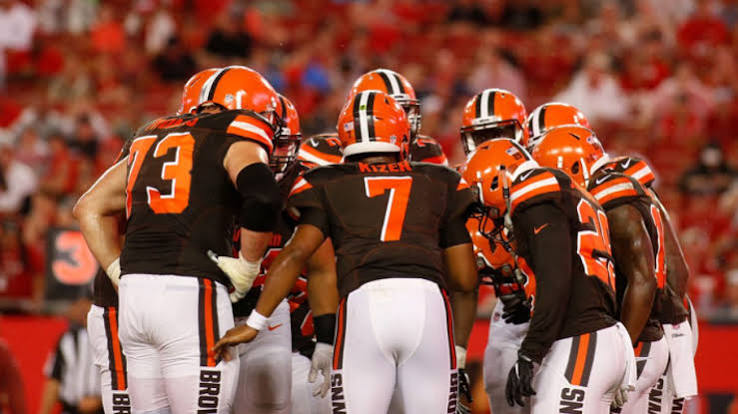
Why are the Browns called the Browns is a question that comes up almost every time someone notices how unusual the name sounds compared to other NFL teams.
Most franchises are named after animals, colors, or regional traits, but the Browns are named, at least officially, after a person.
The story behind it involves a taxi-cab magnate, a legendary coach, a fan contest, and even a famous boxer.
Quick Facts About the Cleveland Browns Name
Before diving into the full story, here’s a quick snapshot of the key facts behind the name.
| Fact | Detail |
|---|---|
| Team founded | 1944 (first played in 1946) |
| Founding owner | Arthur B. “Mickey” McBride |
| First head coach | Paul Brown |
| League joined first | All-America Football Conference (AAFC) |
| Joined the NFL | 1950 |
| Official name origin | Named after coach Paul Brown |
| Alternate name theory | Named after boxer Joe Louis, “The Brown Bomber” |
| Team with no helmet logo | The Browns are the only NFL team without one |
Why Are the Browns Called the Browns? The Story Behind
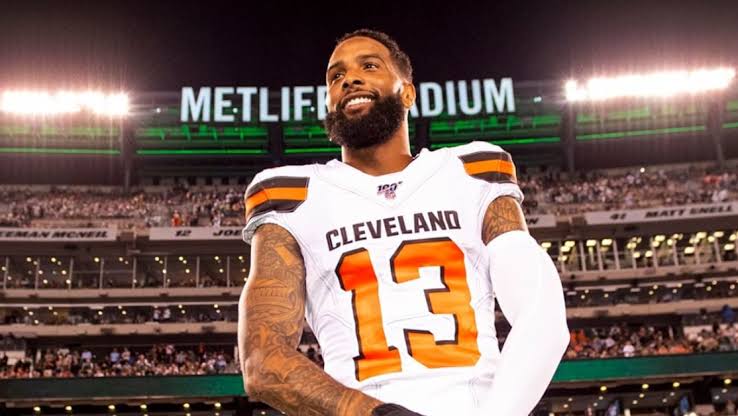
The story of the Browns’ name starts long before the team ever played a single down of football.
Understanding the full timeline makes it much easier to see why the name stuck and why it’s still debated today.
1944: A Taxi Magnate Buys a Football Team
In 1944, businessman Arthur B. “Mickey” McBride secured a Cleveland franchise in the newly formed All-America Football Conference.
McBride wasn’t a huge football fan himself, but he liked the idea of owning a professional sports team.
He had money from his taxi-cab business and used it to fund what would become one of football’s most successful franchises.
His first major decision, and arguably the best move in franchise history, was choosing who would coach the new team.
Hiring Paul Brown
McBride brought in Paul Brown, who was already one of the most successful and famous coaches in Ohio at the time.
Brown had coached at the high school level and later led Ohio State to a national collegiate championship.
Given his reputation, Brown was handed a large salary, part ownership of the team, and full control over personnel decisions.
The excitement around his hiring was a major reason Cleveland football fans were thrilled about the new franchise.
The Fan Contest to Name the Team
In the spring of 1945, McBride held a name-the-team contest through the Cleveland Plain-Dealer newspaper.
Fans were invited to submit their suggestions, and the entries were narrowed down to the most popular choices.
The winning entry from the contest was actually “Cleveland Panthers,” which briefly seemed like the team’s new identity.
However, this name would not last long once a legal issue came to light.
Why “Cleveland Panthers” Was Rejected
Shortly after “Panthers” was announced as the winning name, a man named Charles Zimmerman came forward.
Zimmerman had owned a previous independent Cleveland football team also called the Panthers, and he claimed the naming rights.
He offered to lease or sell the name to McBride, but McBride, a shrewd businessman, declined the offer entirely.
At this point, the team went without an official nickname, and fans and media began calling it “Cleveland” or “Paul Brown’s team.”
Settling on “Browns”
Since fans and reporters were already referring to the team informally as “Paul Brown’s team,” the name “Browns” felt natural.
McBride suggested calling the franchise the Browns since that’s what everyone was already calling it anyway.
Coach Brown initially resisted the idea, feeling it seemed boastful to name a team after himself.
He reportedly preferred “Panthers,” but once that name was ruled out, he eventually agreed to “Browns” in August 1945.
Two Competing Theories About the Name
Even though the story above explains how the name came to be, there are actually two competing theories about its true origin.
Theory 1: Named After Coach Paul Brown
The most widely accepted theory is that the team was simply named after its first head coach, Paul Brown.
This aligns with the timeline of the fan contest and the fact that fans were already calling it “Paul Brown’s team.”
The Cleveland Browns organization officially supports this version of the story today.
Later in life, Paul Brown himself admitted the team was indeed named after him, settling much of the debate.
Theory 2: Named After Boxer Joe Louis (“Brown Bomber”)
The second theory claims the team was actually named the “Brown Bombers,” after boxer Joe Louis’s famous nickname.
Under this theory, the name was later shortened simply to “Browns” over time.
Coach Brown himself promoted this version early in the franchise’s history, likely to avoid appearing boastful about naming the team after himself.
However, Joe Louis had no actual connection to the city of Cleveland, which weakens this theory considerably.
Which Theory Is Actually True?
Most historical evidence points toward the Paul Brown origin story as the accurate explanation.
Coach Brown’s own later admission, combined with the documented fan contest timeline, strongly supports this version.
The Joe Louis theory appears to have been a modest deflection from Brown, who didn’t want to seem self-promoting.
Today, the Browns organization officially credits Paul Brown as the namesake, closing most of the debate for good.
Table: Comparing the Two Name Theories
| Theory | Supporting Evidence | Weaknesses |
|---|---|---|
| Named after Paul Brown | Fan contest timeline, Brown’s later admission, official team stance | Brown initially denied it publicly |
| Named after Joe Louis (“Brown Bomber”) | Promoted by Brown early in franchise history | Louis had no ties to Cleveland |
Other NFL Teams Named After Real People
The Browns aren’t the only professional football team named after an actual person, though it’s a short list.
The Buffalo Bills were named after western folk hero “Buffalo Bill” Cody, tying the name to regional history.
The Kansas City Chiefs were named after former Kansas City Mayor H. Roe Bartle, who was nicknamed “Chief.”
The short-lived Los Angeles Dons were named after actor and co-owner Don Ameche, another example from football’s early era.
Table: NFL and Historical Teams Named After People
| Team | Person Honored |
|---|---|
| Cleveland Browns | Coach Paul Brown |
| Buffalo Bills | “Buffalo Bill” Cody |
| Kansas City Chiefs | Mayor H. Roe Bartle (“Chief”) |
| Los Angeles Dons (historical) | Actor Don Ameche |
| Decatur Staleys (historical) | Sponsor A.E. Staley |
Why the Browns Have No Helmet Logo
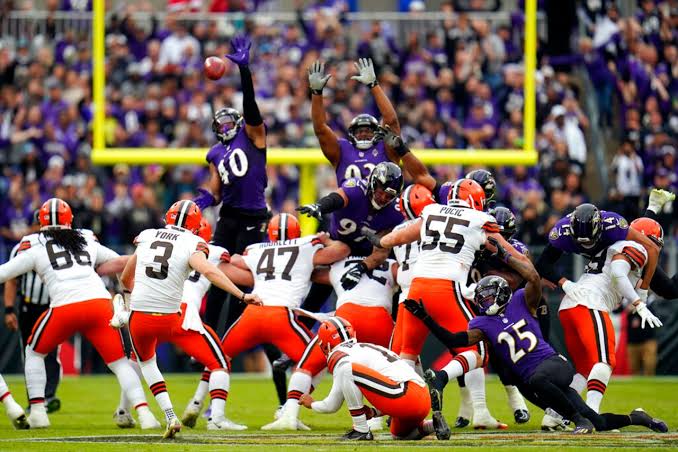
One unique fact tied to the Browns’ identity is that they’re the only NFL team without a helmet logo.
Instead, the team’s plain, unadorned helmet has become its unofficial logo over the decades.
For much of the franchise’s history, the helmet has featured a burnt orange base with a dark brown stripe, officially called “seal brown.”
This minimalist look has become a defining, recognizable trait of the Browns brand across NFL history.
The Brownie Elf Mascot
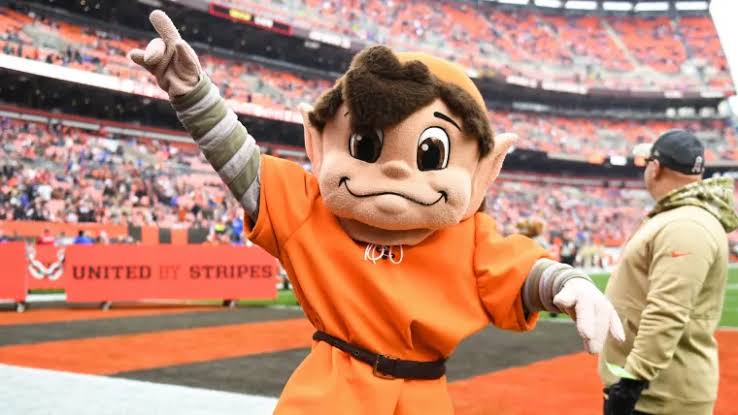
Since the team isn’t named after an animal, the Browns adopted a mascot called the “Brownie Elf” in their early years.
The elf character appeared on various promotional materials and merchandise throughout the 1950s and 1960s.
Owner Art Modell removed the elf in the mid-1960s, feeling it looked too childish for the franchise’s image.
The Brownie Elf mascot was later revived after the team’s return to Cleveland in 1999.
Team Colors: What Do They Represent
The Browns’ color scheme includes seal brown, burnt orange, and white, which have remained fairly consistent over the decades.
These colors are believed to loosely tie back to the team’s namesake, reinforcing the “Brown” identity visually.
The brown and orange combination has also inspired other team traditions, including the brown-and-orange dog associated with the Dawg Pound fan section.
This color identity remains one of the most recognizable in the NFL today.
From AAFC Dominance to NFL Success
The Browns began play in 1946 in the All-America Football Conference, a rival league to the NFL at the time.
The team dominated immediately, winning all four AAFC championships during the league’s entire existence from 1946 to 1949.
Their standout 1948 season saw the team go a perfect 15-0, becoming the first undefeated team in professional football history.
When the AAFC folded, the Browns joined the NFL in 1950 along with the 49ers and the original Baltimore Colts.
Continued Success in the NFL
Despite predictions that the Browns wouldn’t compete at the NFL level, they won their very first NFL game 35-10.
Quarterback Otto Graham and Coach Brown led the team to ten divisional titles in their first ten seasons in the league.
Legendary running back Jim Brown joined the team in 1957 and went on to set nearly every major NFL rushing record.
The Browns won NFL championships in 1950, 1954, 1955, and 1964, cementing their place among the league’s early powerhouses.
The Move to Baltimore and Return of the Browns
In 1995, owner Art Modell announced he would be relocating the franchise to Baltimore, sparking outrage among Cleveland’s fan base.
Legal battles and negotiations eventually led to an agreement that let Modell move his personnel to Baltimore under a new name.
That new franchise became the Baltimore Ravens, while the “Browns” name, history, and colors legally remained in Cleveland.
A new Cleveland Browns franchise was established and returned to the field in 1999, continuing the original team’s name and identity.
Table: Cleveland Browns Championship Timeline
| Year | League | Result |
|---|---|---|
| 1946-1949 | AAFC | Won all four championships |
| 1950 | NFL | Won NFL Championship |
| 1954 | NFL | Won NFL Championship |
| 1955 | NFL | Won NFL Championship |
| 1964 | NFL | Won NFL Championship |
| 1995 | NFL | Franchise moves to Baltimore, becomes Ravens |
| 1999 | NFL | New Cleveland Browns franchise begins |
Quick Facts About Paul Brown
Paul Brown remains one of the most influential figures in professional football history, well beyond the naming controversy.
He coached the team to a career record of 214-158-8, an impressive .767 winning percentage over his tenure.
Brown earned Coach of the Year honors six times and was later inducted into the Pro Football Hall of Fame.
His legacy is honored with statues at multiple locations tied to his coaching career, including Ohio and his alma mater.
Fun Facts About the Browns Name and History
The term “taxi squad,” still used in football today, actually originated from Paul Brown’s team and owner McBride’s taxi business.
McBride hired extra players to drive his taxi cabs so they could remain close to the team without violating roster limits.
When it was time for practice, these players, part of the “taxi squad,” would head straight to the practice field.
This quirky bit of football history ties directly back to the same ownership group responsible for naming the Browns.
Why the Debate Still Continues Today
Even though the Browns organization officially supports the Paul Brown origin story, some fans still prefer the Joe Louis theory.
Part of the appeal of the Joe Louis story is its connection to a beloved cultural icon of the era.
However, historical documentation, including the fan contest records and Brown’s own later admission, strongly favors the simpler explanation.
Understanding both sides gives fans a fuller picture of just how unusual and layered this team name really is.
The Dawg Pound: Another Piece of Browns Identity
Beyond the team name itself, Cleveland’s fan culture has added its own unofficial symbols over the years.
The Dawg Pound, a rowdy section of the old Cleveland Municipal Stadium, became famous for fans wearing dog masks and barking at opponents.
This tradition eventually inspired the brown-and-orange dog mascot imagery used across various Browns promotions today.
While unrelated to the “Browns” name origin itself, the Dawg Pound has become just as central to the team’s identity.
Notable Players Who Shaped the Browns Legacy
Beyond Paul Brown and Jim Brown, several other players have left a lasting mark on the franchise’s history.
Quarterback Otto Graham led the team through its most dominant early years, both in the AAFC and the NFL.
Lou Groza, nicknamed “The Toe,” became one of the most reliable kickers and offensive linemen in franchise history.
Quarterback Bernie Kosar, drafted in 1985, led the team to three AFC Championship appearances in the late 1980s.
More recent notable names include Myles Garrett, Nick Chubb, and Baker Mayfield, who have carried the franchise’s identity into the modern era.
Table: Key Figures in Browns History
| Name | Role | Era |
|---|---|---|
| Paul Brown | Founding head coach | 1946-1962 |
| Otto Graham | Quarterback | 1946-1955 |
| Jim Brown | Running back | 1957-1965 |
| Lou Groza | Kicker/Offensive lineman | 1946-1967 |
| Bernie Kosar | Quarterback | 1985-1993 |
| Myles Garrett | Defensive end | 2017-present |
Browns Rivalries Worth Knowing
The Browns share rivalries with all three of their AFC North division opponents today.
Their most storied rivalry, however, is with the Pittsburgh Steelers, often referred to as the “Turnpike Rivalry.”
Historical rivalries also developed with the Denver Broncos during a stretch of AFC Championship matchups in the late 1980s.
One of the most painful moments in this Broncos rivalry, known as “The Fumble,” still resonates with longtime Browns fans today.
The Browns’ Return and Modern Era
Since returning to the NFL in 1999, the Browns have worked to rebuild the winning culture of their earlier decades.
The franchise made a notable postseason appearance during the 2021 season under new ownership.
Owners Dee and Jimmy Haslam purchased the team in 2012 and have overseen its modern rebuilding efforts.
As of recent seasons, the franchise continues to be valued among the more recognizable, historically rich franchises in the NFL.
How the Name Compares to Other Unusual NFL Team Names
The Browns aren’t the only NFL team with a name that raises questions among casual fans.
The New York Jets were originally called the Titans before renaming due to jets flying overhead near their old stadium.
The Tennessee Titans, coincidentally, later adopted the name the Jets had left behind after their own relocation and rebrand.
Compared to these stories, the Browns’ name stands out as one of the few tied directly to a real person’s surname.
Why the Name Has Lasted So Long
Despite the franchise’s ups and downs, including relocation and rebuilding, the “Browns” name has remained remarkably consistent since 1945.
Unlike many franchises that rebrand after ownership changes, Cleveland’s identity has stayed tied to its founding coach for nearly eight decades.
This consistency has helped make the Browns’ name and colors instantly recognizable, even during less successful seasons, unlike franchises that have rebranded multiple times over the decades.
For many fans, the name itself has become a piece of Cleveland sports history that goes beyond wins and losses.
A Name Rooted in Cleveland Football History
Looking back at the full timeline, from McBride’s taxi business to Paul Brown’s reluctant acceptance, the Browns’ name feels less like a marketing decision and more like an organic piece of football history.
Few NFL franchises can trace their name so directly and clearly to a single, documented moment in time, which is part of why this story continues to attract curious fans decades later.
Frequently Asked Questions (FAQs)
1. Why are the Cleveland Browns called the Browns?
They’re officially named after their first head coach and co-founder, Paul Brown, who joined the team in 1945.
2. Were the Browns really named after boxer Joe Louis?
That’s a competing theory, but Joe Louis had no ties to Cleveland. Most evidence favors the Paul Brown origin.
3. What was the Browns almost named instead?
Fans initially voted for “Cleveland Panthers.” That name was rejected due to a prior team owning the rights.
4. When did the Cleveland Browns start playing?
The franchise was founded in 1944 and began playing games in the AAFC in 1946.
5. Why don’t the Browns have a helmet logo?
They’re the only NFL team without one. Their plain helmet design has become their unofficial logo.
6. Did Paul Brown want the team named after himself?
No, he initially resisted the idea and preferred “Panthers.” He later accepted and admitted the name honored him.
7. What league did the Browns play in before the NFL?
They played in the All-America Football Conference (AAFC) from 1946 to 1949 before joining the NFL in 1950.
8. Why did the Browns become the Baltimore Ravens?
Owner Art Modell moved the franchise to Baltimore in 1995. The Browns’ name and history stayed in Cleveland.
9. What are the Browns’ official team colors?
Seal brown, burnt orange, and white make up the team’s traditional color scheme, tied to their namesake.
10. Is Paul Brown in the Pro Football Hall of Fame?
Yes, Paul Brown was inducted into the Pro Football Hall of Fame for his coaching achievements and legacy.
Conclusion
The Cleveland Browns owe their name to a mix of a fan contest, a rejected alternative, and the reputation of one legendary coach, Paul Brown.
While a competing theory about boxer Joe Louis’s “Brown Bomber” nickname has floated around for decades, most historical evidence, including Brown’s own later admission, supports the simpler and more direct explanation.
Along the way, the franchise built a name tied closely to its identity, from a logoless helmet to the Brownie Elf mascot and its dominant early championship runs.
Even after the turbulent move to Baltimore in 1995, the Browns name, colors, and history remained in Cleveland, preserving one of football’s most unusual team name stories. Understanding this history adds real depth to why fans still debate and celebrate the Browns’ unique identity today.