
Product Launches & the Importance of Live Sampling
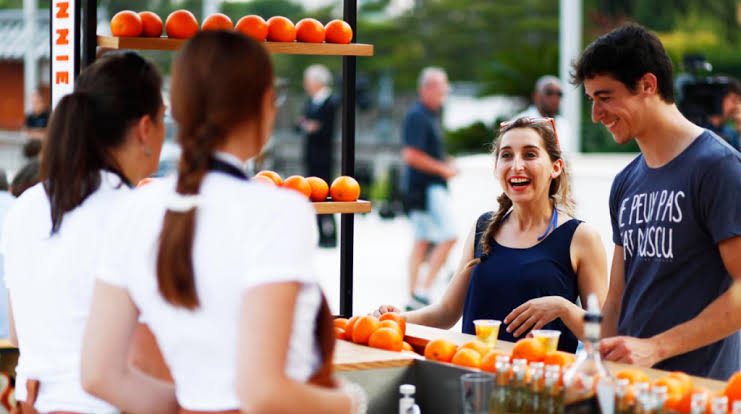
Launching a product comes down to getting people to try it. Live sampling puts the product in front of the audience a brand most wants to reach while it’s still new, and lets the brand watch the response as it happens.
A launch built around sampling elicits reactions and questions during the event, and the brand team hears them directly.
Why Trying a Product Changes the Conversation
A new product has no reputation yet, so the initial impression people form at launch strongly influences how the product is received afterwards. A launch announcement describes the product, and a sample lets each person form their own opinion. Someone who tastes a new drink or handles a new device has information that no description can convey, and they carry that experience into their next purchase decision.
A sample also removes the risk of buying something unfamiliar, since the person already knows whether they like it. People who walk up to a sampling counter have chosen to spend time with the product, which makes the conversation with the brand team easier because they’re already interested and have questions ready. Staff can answer those questions while the product is in the person’s hand, which is the best time to do so.
Launch day also sets the tone for the campaign that follows, and a product introduced through a good experience has a head start in its commercial life.
Food Made Live Draws a Crowd
Food prepared on-site draws attention from across the venue. The smell of something cooking and the sight of a team finishing a dish in front of guests give people a reason to walk over before anyone has said a word about the product. When they arrive, the brand has an audience that is curious and relaxed.
Guests film food being made in front of them, and that content goes onto their own social accounts. A launch gains coverage that continues after the event ends, and the people posting about it are the ones the brand wants talking about the product. Press and content creators who attend get the same experience, giving them something to write about through direct contact with the product.
The format also suits brands that don’t sell food. A branded counter serving freshly made food gives guests a reason to approach, and the product being launched is introduced to people who are already engaged and enjoying themselves.
How Experiential Product Launches Come Together
Creative activation agencies produce experiential product launches featuring branded trucks and pop-up builds, where food is prepared live on-site. A truck arrives at a venue as a complete activation, and a pop-up build is installed inside a retail space or an event venue. Both formats are designed around the product being launched, so the look of the build and the food on offer both come from the product itself.
Trucks travel wherever the target audience gathers, allowing a launch to meet customers in several locations. A launch that tours can introduce the product to different audiences over time, with the same team and the same build moving between sites.
What the Brand Learns on the Day
A live launch puts brand staff face-to-face with the audience, and what people say reveals a lot about the product. Questions show what the audience wants to know, and the features people comment on show where interest lies. Brands also watch how guests handle the packaging and which variants they choose, and staff hear it all while the event is underway, so messaging for the campaigns that follow can be adjusted with real evidence to back it up.
Sampling counters also collect contact details. Guests who have tried the product and want to hear more leave their details with the team, giving the brand a list of people who have already had a positive experience with the product. Those contacts are warmer than those from a cold outreach list.
A Launch People Remember
Taste and smell are closely linked to memory, so a product somebody has sampled stays with them well after the event. When that product appears later on a shelf or in an advert, the person already has an experience of it to refer back to.
The immersion lasts beyond the activation itself because the audience remembers the experience and associates it with the brand.