
Planning a VR Fashion Showcase Around What Viewers Can Actually See
A virtual fashion presentation needs more than a striking room and an impressive headset. Its design should help viewers notice the clothes. The Brain Dance VR viewing guide provides a starting point for video setup; planning a showcase begins with deciding which details the chosen format can communicate clearly.
Consider a small collection built around three jackets. The audience might need to understand the silhouette, compare the fabrics and see how the garments move. Those are specific editorial goals. A surrounding scene can provide atmosphere, but atmosphere alone will not explain a seam, a lining or the reason one cut feels different from another.
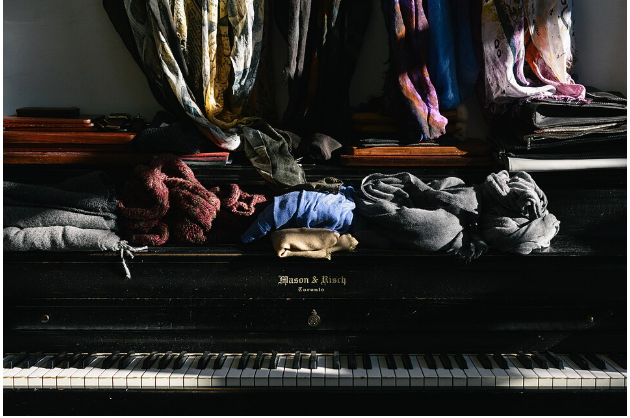
Clothes among studio objects illustrate why a fashion presentation needs a clear visual focus. Photo: Celia Spenard-Ko, CC0 1.0, Wikimedia Commons.
Start with a viewing question
Write down what a visitor should understand after the presentation. A question such as how the jacket changes shape when worn is more useful than a vague ambition to make the collection immersive. It gives the creator a way to judge camera placement, scene duration and the need for additional photographs.
Keep the first version focused. Three clearly presented garments can teach the team more about the format than a long collection shown without a consistent plan. A short sequence also makes testing easier: reviewers can compare the same moment and identify which detail they could or could not see.
For each garment, choose one primary observation and one supporting detail. The main observation might concern the outline when the wearer turns. The supporting detail might concern a fastening or a pocket. If both require incompatible viewing distances, use separate moments rather than expecting one camera position to explain everything equally well.
Separate a recording from a navigable showroom
A panoramic recording places the viewer at the camera’s captured position. Turning can reveal other directions, but it does not necessarily let the viewer step around a mannequin. An interactive three-dimensional showroom can be built to support that movement, yet it requires a suitable representation of the garments and the surrounding space.
Explain that difference in the release description. A recorded tour can be a strong presentation when its viewpoints are selected carefully. Problems arise when the invitation promises free exploration and the delivered experience only supports looking around. The audience should know what movement and interaction are available before the session starts.
Do not assume that a photorealistic appearance answers this question. A convincing image can still be tied to one location. Conversely, a visibly stylized environment may allow extensive interaction. Decide which property serves the collection, then choose a format that can deliver it within the available production resources.
Give the clothes a clear visual hierarchy
A busy studio contains equipment, furniture, accessories and unfinished work. The photograph accompanying this article shows how clothing can sit among other objects in a creative space. That setting may tell a story, but a showcase still needs to make the intended subject easy to find.
Use a simple test during planning: when someone enters the scene, what are they likely to notice first? If the answer is an unrelated bright object, reconsider its placement or the starting direction. The aim is not to remove every sign of the studio. It is to decide which surrounding details support the collection and which compete with it.
Leave enough time for viewers to look. A sequence that feels measured in a flat preview may feel rushed when the audience has to orient itself before examining a garment. Test the actual viewing experience rather than relying solely on the editor’s monitor. A pause with a clear purpose can be more informative than another elaborate transition.
Use close views for claims that need evidence
A wide scene is a poor place to make a precise claim about tiny construction details. When discussing stitching, a closure or fabric texture, provide a view in which that detail is actually visible. This might be a separately framed close-up, a still photograph or an additional viewpoint supported by the chosen experience.
Keep descriptions proportional to what the media can establish. A visual presentation cannot let viewers feel a fabric’s weight or texture directly. Explain materials and construction in words, and distinguish a design intention from an experience the viewer can verify through the headset. Clear limitations make the description more useful.
The V&A’s fashion collection is a helpful editorial reference for treating garments as objects with context. A showcase can borrow that broad discipline: name the item, explain why a detail matters and connect it to the collection’s story. This does not require presenting a contemporary commercial collection as a museum exhibition or implying a museum endorsement.
Make comparisons consistent
If the purpose is to compare two pieces, keep the viewing conditions reasonably consistent. A change in camera distance or lighting can make the comparison harder to interpret. Note those choices during planning so that the team does not mistake a production difference for a garment difference when reviewing the result.
Give items stable names across the video, accompanying photographs and written description. A viewer should be able to identify the same piece after taking the headset off. If a garment appears in several versions, label the versions clearly. Consistent naming reduces avoidable questions and makes feedback easier to apply.
Test comprehension before adding polish
Ask a reviewer to watch the short draft without a live explanation from the creator. Afterwards, ask what they understood about the three jackets and which detail remained unclear. Their answer is more valuable than a general statement that the room looked impressive. It tells the team whether the presentation communicated its original purpose.
Revise the moment that caused confusion before adding more decorative effects. The fix may be a clearer caption, a longer view or a simpler starting position. When possible, test again with the same viewing setup and compare the specific observation that improved. This keeps the review focused on the audience’s experience.
A successful VR fashion showcase leaves viewers with a clearer understanding of the collection. The format is serving that result when its space, pacing and interaction help people notice something meaningful about the garments. Begin with those observations, document the viewing requirements and let the technical choices follow the story the clothes need to tell.


