Why Do Dogs Get Skin Tags? Types & Causes 2026

If you just found a small, soft lump on your dog and started searching “why do dogs get skin tags,” take a breath. These growths are usually harmless.
Skin tags are one of the most common benign growths in dogs. They tend to show up out of nowhere and can look alarming, especially the first time you notice one.
Why Do Dogs Get Skin Tags?
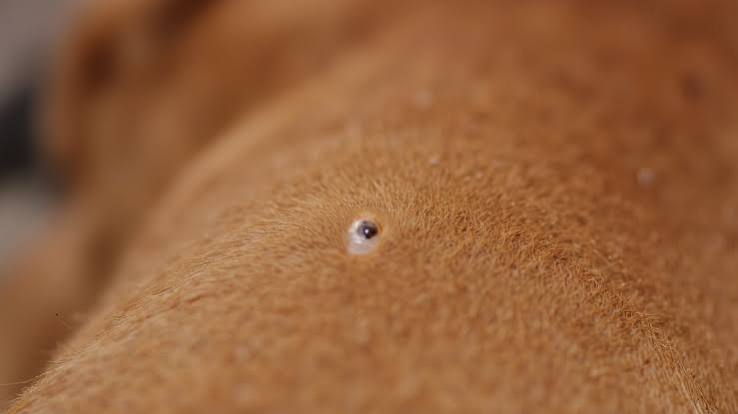
Dogs get skin tags mainly from chronic friction, aging skin, genetics, and hormonal changes. Repeated rubbing from collars, harnesses, or skin folds irritates the skin over time, and this irritation can trigger small overgrowths of collagen and blood vessels known as skin tags.
What Is a Skin Tag on a Dog?
A skin tag, medically called an acrochordon or fibroepithelial polyp, is a small, soft growth made of collagen and blood vessels. It usually hangs off the skin by a thin stalk.
Most skin tags are the same color as your dog’s surrounding skin. They can also appear pink, tan, or darker depending on your dog’s coat and skin pigmentation.
They are not painful and are not a sign of illness on their own. Vets consider them a cosmetic issue in almost every case.
Why Do Dogs Get Skin Tags? The Main Causes
There is no single confirmed cause of skin tags in dogs. Veterinary dermatologists point to several overlapping factors instead.
1. Age and Skin Elasticity
Skin tags are far more common in dogs over five years old. As dogs age, their skin loses elasticity and becomes more prone to small benign growths.
Older skin also heals more slowly after minor irritation, which gives skin tags more opportunity to form.
2. Chronic Friction and Irritation
Repeated rubbing is one of the most widely accepted causes. Areas where skin constantly rubs against skin, a collar, a harness, or a hard surface are prime spots for skin tags.
This is why skin tags cluster around the chest, elbows, armpits, groin, and neck. Deep-chested breeds like Greyhounds and Doberman Pinschers often develop them on the sternum from pressure while lying down.
3. Genetics and Breed Predisposition
Some breeds are simply more prone to skin tags than others. Boxers, English Bulldogs, Poodles, and Cocker Spaniels are frequently mentioned as higher-risk breeds.
Genetics can influence how a dog’s skin responds to everyday friction and how quickly small growths form.
4. Hormonal Changes
Hormonal imbalances can affect skin texture and elasticity. Conditions like hypothyroidism or Cushing’s disease are sometimes linked to an increase in skin growths, including skin tags.
If your dog develops several skin tags suddenly alongside other symptoms like hair loss or weight changes, mention this pattern to your vet.
5. Papillomavirus (Warts, Not True Skin Tags)
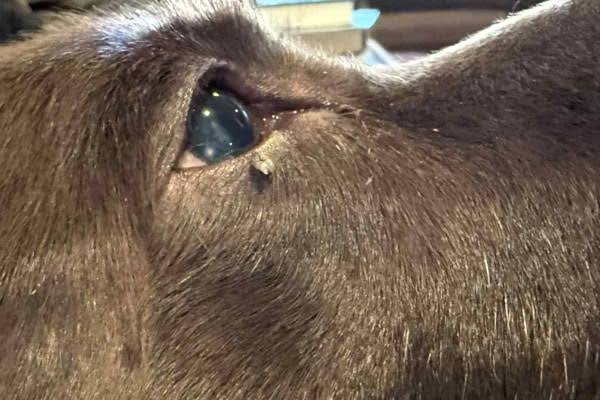
Canine papillomavirus causes warts, which are sometimes confused with skin tags. This virus is more common in young or immune-compromised dogs.
True skin tags are not caused by a virus, which is an important distinction your vet can confirm on examination.
6. Environmental Exposure
Some veterinary sources suggest that prolonged sun exposure may contribute to skin tag formation, similar to how it affects other skin changes over time.
Regular grooming and skin checks can help you catch new growths early, regardless of the exact cause.
Where Do Skin Tags Usually Appear on a Dog?
Skin tags favor areas with repeated pressure or friction. The most common locations include:
- Chest and sternum
- Elbows and knees
- Armpits and groin
- Neck, where collars sit
- Eyelids
- Legs and paws
Some dogs develop a single skin tag, while others develop several clustered in one area.
Skin Tag vs Wart vs Tick vs Tumor
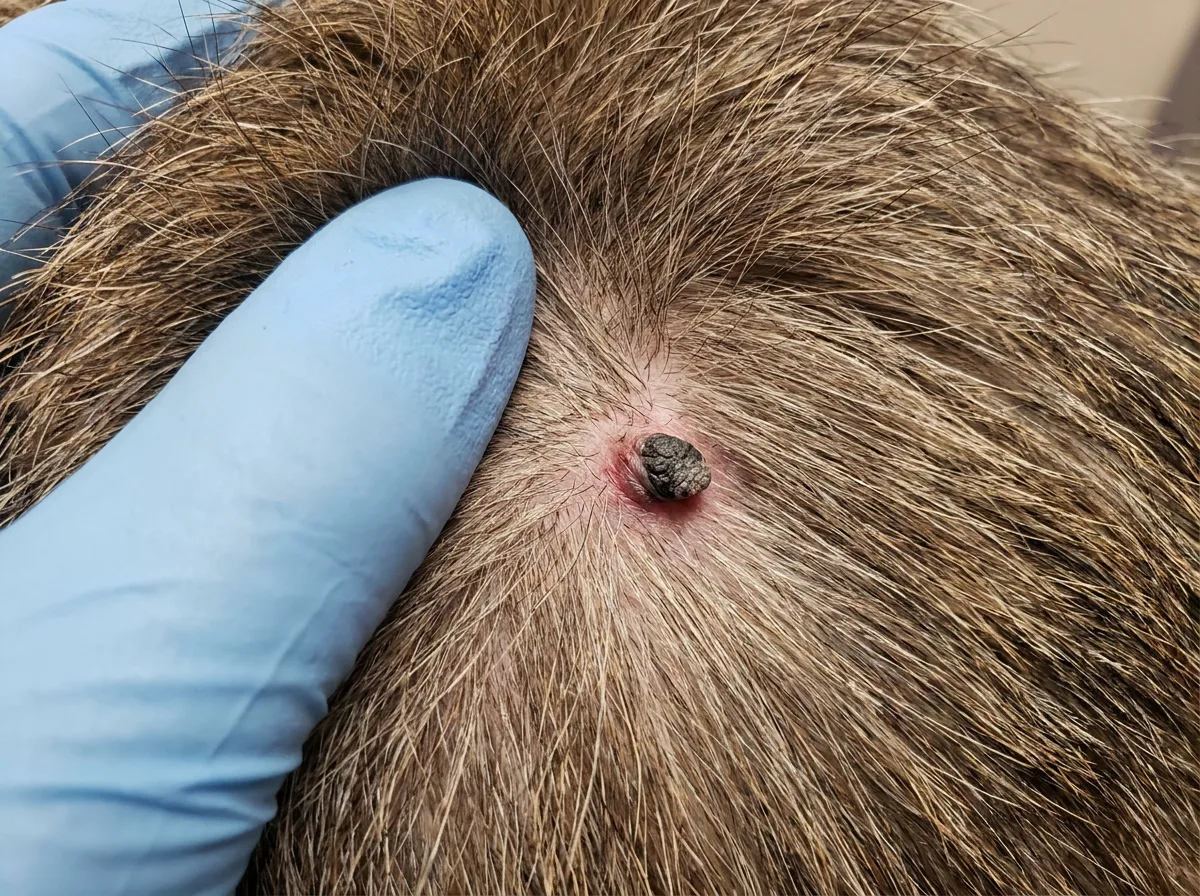
Telling these apart matters because the wrong guess can lead to unnecessary pain, or a missed medical issue. Here is a quick comparison.
| Growth Type | Texture | Attachment | Movement | Color |
|---|---|---|---|---|
| Skin Tag | Soft, smooth | Thin stalk | Doesn’t move on its own | Same as skin |
| Wart | Firm, rough | Broad base | Doesn’t move on its own | Often darker |
| Tick | Hard, round body | Head embedded in skin | Legs move when touched | Brown, gray, or black |
| Tumor | Varies, often firmer | Broad or irregular base | Doesn’t move | Varies, may change over time |
If you see legs or the growth grows larger within days, treat it as a possible tick, not a skin tag. Ticks should be removed carefully with a tick removal tool.
If a growth changes shape, color, or size quickly, that is a tumor red flag rather than a typical skin tag pattern.
Are Skin Tags Dangerous for Dogs?
In most cases, no. Skin tags are benign and do not turn cancerous. Vets generally view them as a cosmetic finding rather than a health threat.
Problems can occur if a skin tag is in a high-friction spot and gets scratched, bitten, or caught on something. This can cause bleeding or a secondary infection.
When Should You See a Vet About a Skin Tag?
You do not need to rush to the clinic for every small bump, but certain changes deserve a professional look.
- The growth changes size, shape, or color quickly
- It bleeds, oozes, or appears infected
- Your dog constantly licks or scratches at it
- Several new growths appear at once
- You are not sure if it is a skin tag, wart, tick, or tumor
A vet can usually diagnose a skin tag through a simple physical exam. A biopsy or fine-needle aspiration may be recommended if there is any doubt.
How Are Dog Skin Tags Removed?
Most skin tags are left alone since they cause no harm. Removal is considered only when the tag is irritated, growing, or bothering your dog.
Cryotherapy
The vet freezes the skin tag off using a specialized tool. This is quick and generally low-discomfort.
Surgical Excision
The vet cuts the stalk under local anesthetic. This is often done alongside another scheduled procedure, such as a dental cleaning or spay.
Cauterization
Heat or electricity is used to remove the tag and seal the area at the same time, reducing bleeding risk.
Biopsy
If there is any uncertainty about whether a growth is truly a skin tag, your vet may send a tissue sample for lab analysis before or during removal.
Can Skin Tags Be Prevented?
You cannot fully prevent skin tags, especially if genetics or aging are the main driver. You can, however, reduce friction-related risk factors.
- Choose a well-fitted, padded collar or harness
- Provide soft, supportive bedding
- Groom regularly and check the skin for new bumps
- Keep skin folds clean and dry
- Schedule routine vet checkups, especially for senior dogs
Key Takeaways
- Skin tags in dogs are small, soft, benign growths, not a sign of illness.
- Common causes include aging, chronic friction, genetics, and hormonal changes.
- They usually appear on the chest, elbows, neck, and other high-friction areas.
- Skin tags differ from warts, ticks, and tumors in texture, attachment, and movement.
- Most skin tags do not need removal unless they cause irritation or bleeding.
- Any new or changing growth should be checked by a veterinarian to rule out other conditions.
Frequently Asked Questions (FAQs)
Why do dogs get skin tags all of a sudden?
Skin tags often appear without warning because the friction or irritation that causes them builds up gradually before becoming visible. Aging skin also makes sudden growths more likely.
Are skin tags on dogs painful?
No, skin tags are not painful on their own. They can become uncomfortable only if they are scratched, bitten, or located in a high-friction spot.
Can I remove my dog’s skin tag at home?
You should not attempt to remove a skin tag at home. Cutting or pulling it off can cause bleeding, pain, or infection, so removal should always be done by a veterinarian.
Do skin tags on dogs go away on their own?
Skin tags rarely disappear without treatment. Most stay the same size indefinitely, while some slowly grow larger over time.
What dog breeds are most prone to skin tags?
Boxers, English Bulldogs, Poodles, Cocker Spaniels, and deep-chested breeds like Greyhounds and Doberman Pinschers are commonly reported as more prone to skin tags.
How can I tell if it’s a skin tag or a tick?
Look closely for legs and a hard, round body, which indicate a tick. Skin tags are soft, the same color as the skin, and do not move on their own.
How can I tell if it’s a skin tag or a wart?
Warts tend to be firmer, rougher, and have a broader base, while skin tags are soft, smooth, and usually dangle from a thin stalk.
Do skin tags mean my dog has cancer?
No, a typical skin tag is benign and not a form of cancer. Any growth that changes quickly in size, shape, or color should still be examined by a vet to rule out other conditions.
At what age do dogs usually get skin tags?
Skin tags are most common in dogs older than five years, though they can technically appear at any age.
Can allergies cause skin tags in dogs?
Allergies themselves do not directly cause skin tags, but the scratching and skin irritation they trigger can contribute to their formation over time.
Is it normal for a dog to have multiple skin tags?
Yes, it is common for dogs, especially seniors, to develop more than one skin tag, often clustered in the same high-friction area.
Should I worry if my dog’s skin tag is bleeding?
Yes, a bleeding skin tag should be checked by a vet, since it may indicate irritation, infection, or accidental injury.
Can a collar cause skin tags on a dog’s neck?
Yes, a collar that rubs repeatedly against the same spot is a common trigger for skin tags in that area.
Do skin tags need a biopsy?
Not always. A vet can often diagnose a skin tag visually, but a biopsy may be recommended if the growth looks unusual or is changing.
How much does skin tag removal cost for dogs?
Cost varies by location, size, and whether removal is combined with another procedure, but it is generally an affordable, minor treatment compared to major surgery.
Can skin tags come back after removal?
A skin tag removed completely, including the stalk, typically does not return in that exact spot, though new ones can form elsewhere.
Conclusion
So, why do dogs get skin tags? In most cases, it comes down to a mix of aging skin, everyday friction, and genetics rather than any single cause.
They are almost always harmless, but keeping an eye on your dog’s skin and knowing what a normal skin tag looks like helps you catch anything unusual early. When in doubt, a quick vet check offers peace of mind.