Why Does Bolivia Have Two Capitals? The Real Reason 2026
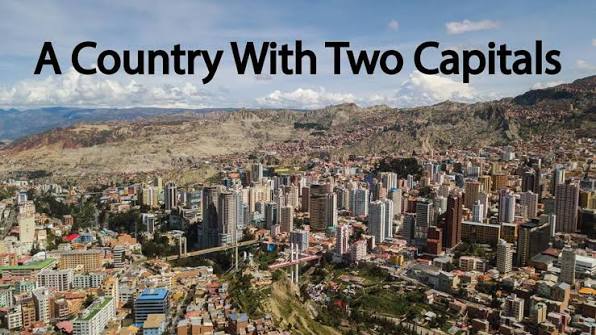
Why does Bolivia have two capitals? It’s one of the most searched geography questions out there, and the short answer involves a 19th-century civil war, a silver-mining decline, and a constitution that was never rewritten.
Sucre is the official constitutional capital, while La Paz functions as the seat of government where the president and congress actually work. This split wasn’t planned from day one — it grew out of a regional power struggle that’s still visible in Bolivian politics today.
Why Does Bolivia Have Two Capitals? The Short Answer
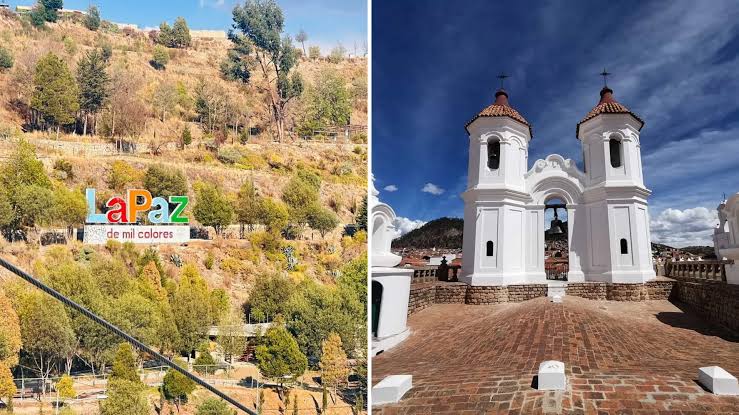
Bolivia has two capitals because of a 19th-century conflict called the Federal War of 1899, fought between the conservative south and the liberal north.
Sucre held the original capital title from the country’s founding in 1825. After the war, the government itself physically relocated to La Paz, but the constitution was never amended to match.
That historical compromise is why Bolivia still operates with one legal capital and one working capital today, more than 125 years later.
Bolivia’s Two Capitals At a Glance
This table summarizes the core split between Bolivia’s two capital cities before diving into the full history below.
| City | Official Role | Branch of Government | Region |
|---|---|---|---|
| Sucre | Constitutional capital | Judiciary (Supreme Court) | Southern Bolivia |
| La Paz | Seat of government | Executive and Legislative | Western Bolivia |
Meet Sucre: The Constitutional Capital
Sucre is written into the Bolivian Constitution as the nation’s official capital, a status it has held continuously since independence in 1825.
The city was originally founded by the Spanish in the 1530s under the name La Plata, later renamed in honor of Antonio José de Sucre, Bolivia’s second president.
Today, Sucre hosts the Supreme Court and the judicial branch, along with the Casa de la Libertad, where Bolivia’s Declaration of Independence was signed on August 6, 1825.
Meet La Paz: The Seat of Government
La Paz is where Bolivia’s president, vice president, and National Congress actually carry out their daily work, even though it isn’t the constitutional capital.
Founded by the Spanish in 1548, La Paz sits in a dramatic high-altitude canyon surrounded by the Andes Mountains, making it the highest seat of government in the world.
Because most embassies, ministries, and international business operate from La Paz, many travelers and even some reference sources mistakenly list it as Bolivia’s sole capital.
The History Behind Bolivia’s Dual Capital System
Understanding why Bolivia has two capitals requires looking back to the colonial period, when Sucre, then called La Plata, was the regional center of law and education.
Sucre’s proximity to the silver-rich mines of Potosí made it enormously wealthy and politically dominant throughout the Spanish colonial era and the early republic.
After independence, Sucre’s status as capital felt natural, since it was already the seat of the colonial high court and the city where independence itself was declared.
Why Silver, Tin, and Trade Mattered
By the late 1800s, Bolivia’s economy was shifting away from southern silver mining toward tin extraction and trade routes connected to the north and west.
La Paz benefited enormously from this shift, since it sat closer to growing international trade links with Peru and the Pacific coast, unlike isolated, mountain-locked Sucre.
As wealth and population flowed toward La Paz, the city’s political influence grew to match its new economic weight, setting the stage for a national power struggle.
The Federal War of 1899: The Real Turning Point
The Federal War of 1899 is the single event most responsible for Bolivia’s two-capital system, and it’s the answer most history-focused searches are really looking for.
The conflict pitted Bolivia’s Liberal Party, based in La Paz and pushing for federalism, against the Conservative Party, based in Sucre and defending centralized, traditional rule.
| Side | Base | Position |
|---|---|---|
| Liberal Party | La Paz | Wanted federal structure, northern economic influence |
| Conservative Party | Sucre | Wanted centralized rule, traditional southern power |
The Liberals won the war in 1899, and the practical result was that the executive and legislative branches relocated to La Paz almost immediately afterward.
Timeline: Key Dates in Bolivia’s Capital History
Seeing the full sequence of events in one place makes the dual-capital story much easier to follow.
| Year | Event |
|---|---|
| 1538 | Spanish found La Plata, later renamed Sucre |
| 1548 | Spanish found La Paz |
| 1825 | Bolivia declares independence in Sucre; Sucre becomes capital |
| 1839 | City officially renamed Sucre, honoring Antonio José de Sucre |
| 1899 | Federal War breaks out between La Paz and Sucre factions |
| 1900 | Government relocates to La Paz; Sucre keeps constitutional title |
| 2007–2008 | “Capitalia Plena” movement seeks to fully restore capital status to Sucre |
How the Compromise Was Reached
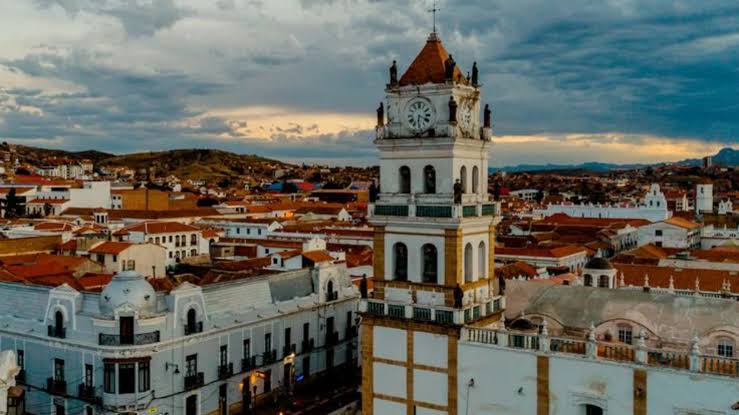
Rather than stripping Sucre of its capital status entirely, Bolivia’s leaders settled on a compromise that preserved the city’s symbolic and legal importance.
Sucre kept its constitutional title as the official capital and retained the judicial branch, including the Supreme Court, which still operates there today.
La Paz, meanwhile, became the practical seat of government, hosting the presidency and congress without ever receiving formal constitutional recognition as “the capital.”
Why Wasn’t the Constitution Ever Changed?
Amending Bolivia’s constitution to formally name La Paz as the capital would have required broad political consensus that has simply never materialized.
Sucre’s status carries deep symbolic weight tied to independence and national identity, making any formal change politically sensitive even more than a century later.
In 2007 and 2008, a movement called “Capitalia Plena” pushed to fully restore Sucre’s capital status, including relocating government branches back, but the effort ultimately failed.
What Each City Actually Controls Today
Bolivia’s split-capital system isn’t just symbolic — each city handles a genuinely different function within the national government structure.
| Government Function | Location |
|---|---|
| President and Vice President | La Paz |
| National Congress (Legislative Assembly) | La Paz |
| Supreme Court of Justice | Sucre |
| Constitutional Tribunal | Sucre |
| Most foreign embassies | La Paz |
This division means Bolivia effectively separates its judicial power from its executive and legislative power geographically, which is unusual on a global scale.
Is La Paz the Real Capital of Bolivia?
This is one of the most common follow-up questions, and the honest answer depends on which definition of “capital” you’re using.
If “capital” means where political power is centered day to day, La Paz fits that definition closely, since the president and lawmakers work there.
If “capital” means the legally designated capital under the constitution, Sucre is the only correct answer, regardless of where government offices actually sit.
How Bolivia’s Two Capitals Compare
Here’s a side-by-side look at how Sucre and La Paz differ across the categories travelers and students ask about most.
| Feature | Sucre | La Paz |
|---|---|---|
| Capital status | Constitutional capital | Seat of government |
| Founded | 1538 (as La Plata) | 1548 |
| Altitude | About 2,800 meters | About 3,640 meters |
| Nickname | La Ciudad Blanca (White City) | — |
| Known for | Colonial architecture, judiciary | Andes views, government, trade |
| Population (approx.) | Around 300,000 | Around 800,000 (city), over 2 million (metro) |
Other Countries With More Than One Capital
Bolivia isn’t actually alone in splitting capital functions across more than one city, which makes the topic a popular comparative geography question.
South Africa famously has three capitals: Pretoria for executive functions, Cape Town for the legislature, and Bloemfontein for the judiciary, a system similar in spirit to Bolivia’s.
Sri Lanka and the Netherlands also separate their official capital from their practical seat of government, showing this isn’t a uniquely Bolivian arrangement.
| Country | Official Capital | Seat of Government |
|---|---|---|
| Bolivia | Sucre | La Paz |
| Netherlands | Amsterdam | The Hague |
| South Africa | Pretoria, Cape Town, Bloemfontein | Pretoria (executive) |
Common Misconceptions About Bolivia’s Capitals
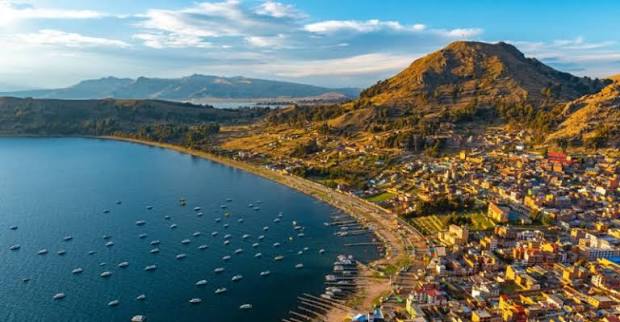
A few myths persist around this topic, often because casual references and even some textbooks oversimplify the situation.
Myth: La Paz is the only capital. La Paz is widely treated as “the capital” in everyday use, but Sucre alone holds that title constitutionally.
Myth: Santa Cruz de la Sierra is a capital city. Santa Cruz is actually Bolivia’s largest city and economic engine, but it has never held capital status of any kind.
Myth: The two-capital system was planned from the start. It actually emerged from war and compromise in 1899, not from any original 1825 constitutional design.
Myth: Bolivia is unique in having a split capital. While Bolivia’s case is well known, several other nations divide capital functions across more than one city for similar historical or political reasons.
What About El Alto and Santa Cruz?
Two other Bolivian cities often get pulled into this conversation, even though neither one holds any capital status.
El Alto sits directly above La Paz on the Altiplano and is technically a separate city, though many travelers mistake it for part of La Paz itself due to their shared metro area and airport.
Santa Cruz de la Sierra, meanwhile, is Bolivia’s largest and fastest-growing city, driving much of the country’s modern economy, yet it has never been named a capital in any constitutional sense.
Keeping these two cities separate from Sucre and La Paz helps avoid one of the most common mix-ups people make when researching Bolivia’s capital system, especially in trivia and crossword contexts.
Why This Topic Confuses Maps and Search Engines
Most world maps and atlases label only one city as Bolivia’s capital, usually La Paz, because it’s where embassies and international functions are based.
This inconsistency is exactly why so many people search “why does Bolivia have two capitals” after noticing conflicting answers across different sources.
Technically, both labels are defensible depending on context, which is part of why this remains one of the most debated capital-city facts in world geography.
Geography and Climate: Sucre vs La Paz
The two capitals sit in dramatically different environments, which helps explain why each developed such a distinct economic role over time.
Sucre rests in a temperate Andean valley at about 2,800 meters, giving it a mild, spring-like climate year-round that made it comfortable for colonial settlers and institutions.
La Paz sits much higher, around 3,640 meters, in a steep canyon below the Altiplano. The thinner air and dramatic terrain make it striking to visit but harder to develop infrastructure across.
These geographic differences shaped migration patterns, trade routes, and ultimately the economic balance of power that led to the 1899 conflict in the first place.
Even today, the contrast is obvious to anyone who visits both cities in the same trip, since adjusting to La Paz’s altitude often takes longer than acclimating to Sucre’s gentler valley climate.
Bolivia’s Official Name and Government Structure
Bolivia’s full official name is the Plurinational State of Bolivia, reflecting its constitutional recognition of dozens of Indigenous nations alongside the mestizo and European-descended population.
The government operates with three branches: executive and legislative power based in La Paz, and judicial power based in Sucre, plus a separate electoral branch also headquartered in La Paz.
This four-branch structure, with one branch physically separated from the other three, is part of what makes Bolivia’s capital arrangement so unusual compared to most modern nations.
Why Travelers Visit Both Capitals
Many visitors to Bolivia make a point of seeing both capitals, since each offers a completely different experience of the country’s culture and history.
Sucre is known for whitewashed colonial buildings, relaxed plazas, and the Casa de la Libertad, making it a popular stop for history-focused travelers and language students.
La Paz offers dramatic mountain views, the bustling Witches’ Market, and access to the Death Road cycling route, appealing more to travelers drawn to adventure and city energy.
Comparing both cities firsthand is often the easiest way to understand why Bolivia’s two-capital system makes practical, cultural sense rather than feeling like an odd technicality.
Could Bolivia Ever Have Just One Capital Again?
The “Capitalia Plena” movement of 2007–2008 pushed to fully restore Sucre as Bolivia’s sole capital, including physically relocating government branches back from La Paz.
The proposal triggered major political tension and ultimately failed to gain enough national support, partly because moving established government infrastructure would have been enormously costly.
Given how entrenched La Paz has become as the practical seat of power, most analysts consider a full reunification of Bolivia’s capital functions unlikely in the near future.
Capital Relocation vs Split Capitals: What’s the Difference
Bolivia’s situation is often confused with full capital relocation, but the two concepts work quite differently in practice.
Full relocation means a country moves its entire capital, including all government branches, from one city to another, as Brazil did when it built Brasília to replace Rio de Janeiro.
Bolivia never did this. Instead, it split functions between two cities, leaving the judiciary in Sucre while the executive and legislative branches moved to La Paz.
| Country | Approach | Outcome |
|---|---|---|
| Brazil | Full relocation | Brasília replaced Rio de Janeiro entirely |
| Nigeria | Full relocation | Abuja replaced Lagos entirely |
| Kazakhstan | Full relocation | Astana replaced Almaty entirely |
| Bolivia | Split capital | Sucre and La Paz share different functions |
This distinction matters because split-capital systems like Bolivia’s tend to persist for generations, while full relocations are usually completed within a few decades once the new city is built and functional.
What This Means for Bolivian National Identity
Bolivia’s two-capital system isn’t just a bureaucratic quirk — it reflects deeper regional identities that still shape national politics today.
Southern, Sucre-aligned regions often emphasize tradition, colonial heritage, and judicial independence, while La Paz and the north are associated with trade, federalism, and executive power.
Many Bolivians see the arrangement as a built-in reminder that no single region should hold all of the country’s political power at once.
Whether that balance feels fair or simply inefficient depends largely on which part of the country you ask, which is part of why the debate has never fully gone away even in recent years.
Quick Facts About Bolivia’s Two Capitals
A short list of standout facts that often come up in trivia, school assignments, and travel planning.
| Fact | Detail |
|---|---|
| Highest capital in the world | La Paz, due to its Andes elevation |
| City where independence was declared | Sucre, on August 6, 1825 |
| War that caused the split | The Federal War of 1899 |
| Branch that stayed in Sucre | The judiciary |
| Country named after | Simón Bolívar |
| Sucre named after | Antonio José de Sucre, second president |
Frequently Asked Questions (FAQs)
What is the capital of Bolivia, Sucre or La Paz?
Both, technically. Sucre is the constitutional capital, while La Paz is the seat of government where the president and congress work.
Why did Bolivia move its capital to La Paz?
After the Federal War of 1899, the winning Liberal Party moved the executive and legislative branches to La Paz, their political base.
Is Sucre still considered Bolivia’s official capital?
Yes. Sucre has never lost its constitutional status and still hosts Bolivia’s Supreme Court and Constitutional Tribunal today.
What caused the Federal War of 1899?
A power struggle between La Paz-based Liberals favoring federalism and Sucre-based Conservatives defending centralized, traditional rule.
Why is La Paz called the seat of government?
Because the president, vice president, and National Congress all operate from La Paz, even without formal constitutional recognition.
Does the Bolivian president live in Sucre or La Paz?
The president works and resides primarily in La Paz, home to the Presidential Palace and main government offices.
Is La Paz the highest capital city in the world?
Yes. At roughly 3,640 meters above sea level, La Paz is widely recognized as the highest seat of government on Earth.
Why is Sucre called the constitutional capital?
Because Bolivia’s constitution names Sucre as the official capital, and it’s where independence was declared in 1825.
Are there other countries with two capitals?
Yes. South Africa, the Netherlands, and Sri Lanka all separate their official capital from their practical seat of government.
Which Bolivian city is bigger, La Paz or Sucre?
La Paz is significantly larger, with a metro population over 2 million compared to Sucre’s roughly 300,000 residents.
Conclusion
So, why does Bolivia have two capitals? The answer traces back to the Federal War of 1899, a regional power struggle between the conservative south and the liberal north that ended with a compromise rather than a clean winner.
Sucre kept its constitutional title and the judiciary, while La Paz became home to the president and congress without ever being formally written into law as the capital.
More than a century later, that split still shapes Bolivian identity, politics, and even how maps label the country. Sucre represents history and legal tradition, while La Paz represents economic power and day-to-day governance.
Travelers, students, and trivia fans keep searching this question precisely because the split feels unusual on a global stage, even though several other nations follow a similar pattern.
Understanding this dual-capital system isn’t just a fun geography fact — it reveals how compromise, regional rivalry, and unfinished constitutional change can quietly outlast the conflict that created them.