Why Was the Second Amendment Created? History & Facts 2026
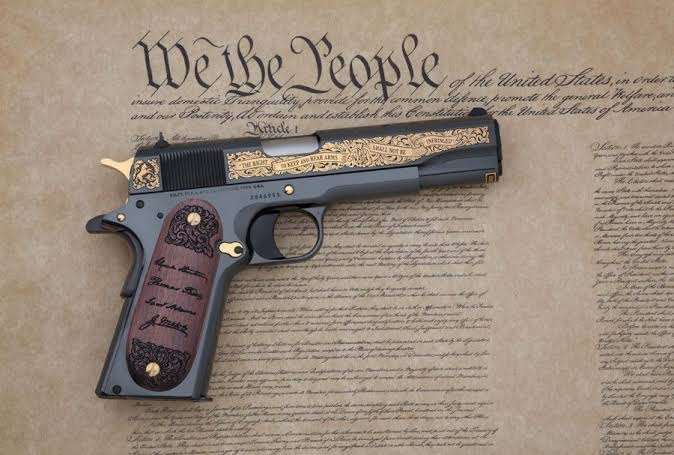
Why was the Second Amendment created is a question rooted in the fears, wars, and political debates of the founding era.
Ratified in 1791 as part of the Bill of Rights, the amendment emerged from centuries of English legal tradition, fresh memories of the Revolutionary War, and deep anxiety over standing armies and government tyranny.
The Text of the Second Amendment
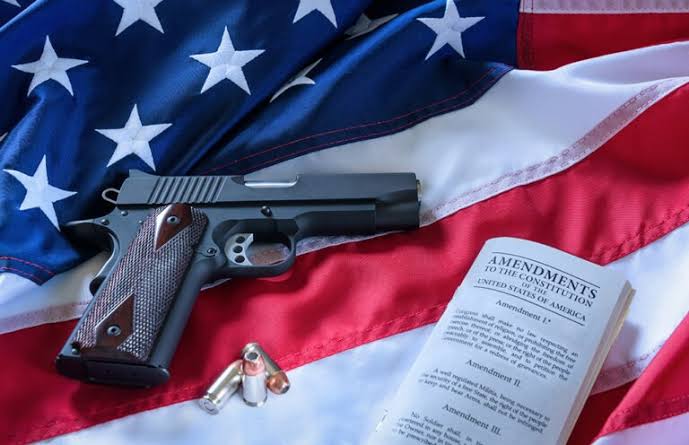
The Second Amendment reads that a well regulated militia, being necessary to the security of a free state, means the right of the people to keep and bear arms shall not be infringed. These twenty-seven words have sparked centuries of legal and political debate.
Its brevity is part of why interpretations vary so widely today, with scholars and courts disagreeing over whether it protects an individual right, a collective militia right, or both.
English Legal Roots of the Amendment
The Second Amendment did not appear out of nowhere. It drew heavily on English legal tradition, especially the English Bill of Rights of 1689, which allowed Protestant subjects to have arms for their defense.
This English right was limited and tied to social class and religion, but it planted the idea that armed citizens could serve as a check against government overreach.
Legal scholar William Blackstone later described the right to possess arms as one of the key protections against threats to life, liberty, and property under English common law.
The Militia Tradition in Early America
Long before the Constitution existed, American colonies relied on militias made up of ordinary citizens rather than professional soldiers. These militias were expected to supply their own weapons and train informally.
This tradition traced back even further to a national militia system established in England during the late 16th century under Queen Elizabeth I. Though that early system largely failed, the concept of citizen-soldiers stuck.
By the time of the American Revolution, militias were seen as essential to local defense and deeply tied to ideas of self-governance and liberty.
Fear of Standing Armies
One of the strongest motivations behind the Second Amendment was deep suspicion of permanent, professional standing armies. Many founders believed a large standing army under central control could become a tool for tyranny.
This fear was not abstract. Colonists had direct experience with British troops occupying cities like Boston, enforcing unpopular laws, and intimidating the population under royal orders.
Militias made up of armed citizens were viewed as a safer alternative, since they answered more directly to local communities rather than a distant, centralized authority.
The Road to Lexington and Concord
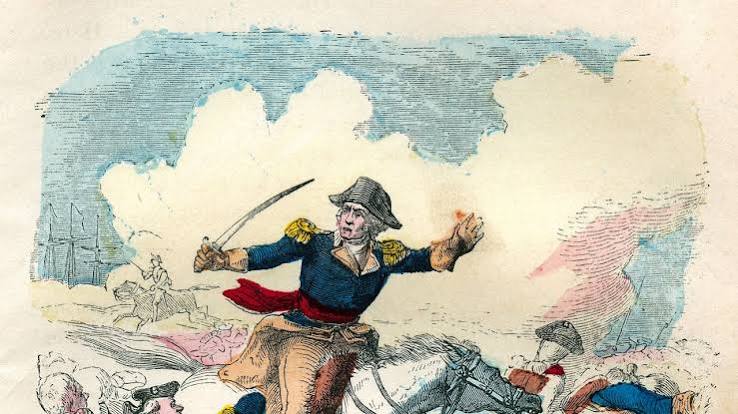
Tensions between colonists and British forces escalated sharply as royal authorities attempted to seize stored arms and gunpowder in Massachusetts. General Thomas Gage led troops toward Lexington and Concord specifically to disarm colonial militias.
The resulting clashes in April 1775 became one of the sparks that ignited the Revolutionary War. This event reinforced the belief among many founders that an armed citizenry was necessary to resist government overreach.
James Madison and the Bill of Rights
James Madison is widely credited with drafting the language that became the Second Amendment as part of the broader Bill of Rights. His goal was partly to satisfy Anti-Federalists who feared the new federal government’s power.
Anti-Federalists worried that a centralized standing military, combined with a powerful federal government, could eventually be used to oppress the very people it was meant to protect.
Allowing civilian militias to exist alongside, or as a check on, federal military power was seen as a compromise that helped secure support for ratifying the Constitution.
Ratification of the Second Amendment
The Second Amendment was ratified on December 15, 1791, as one of the first ten amendments known collectively as the Bill of Rights. This placed it among the earliest formal protections in American constitutional law.
At the time, George Washington was serving his first term as president, and the young nation was still just fifteen years removed from its war for independence against Britain.
The Legislative Journey Through Congress
Early drafts of the amendment included additional language, such as a religious objector clause allowing conscientious objectors to avoid militia service, which was later removed by the Senate.
Other proposed changes, including limitations on standing armies during peacetime, were considered and ultimately rejected before the amendment reached its final wording.
This drafting process shows that the amendment’s language was carefully debated and revised multiple times before reaching the form ratified in 1791.
Individual Right vs Collective Militia Right
| Perspective | Core Argument | Key Reference |
|---|---|---|
| Individual right view | Protects personal right to bear arms for self-defense | District of Columbia v. Heller (2008) |
| Collective militia view | Protects state’s right to maintain organized militias | Historical militia tradition |
| Mixed interpretation | Individual right connected to militia service context | Ongoing scholarly debate |
Landmark Supreme Court Cases
The Supreme Court largely avoided major rulings on the Second Amendment for much of American history, treating it as a low-priority constitutional question for decades.
This changed significantly with District of Columbia v. Heller in 2008, where a 5-4 majority ruled the amendment protects an individual right to possess firearms for self-defense, not simply a collective right tied to militia service.
McDonald v. City of Chicago followed soon after, extending this individual rights interpretation to apply against state and local governments as well as the federal government.
Timeline of Key Events
| Year | Event |
|---|---|
| 1689 | English Bill of Rights codifies limited right to bear arms |
| 1775 | Lexington and Concord clashes over seized colonial arms |
| 1789 | James Madison introduces Bill of Rights language in Congress |
| 1791 | Second Amendment ratified as part of the Bill of Rights |
| 2008 | District of Columbia v. Heller affirms individual rights view |
| 2010 | McDonald v. City of Chicago extends ruling to states |
Why the Amendment’s Wording Still Sparks Debate
The amendment’s structure, referencing both a well regulated militia and the right of the people, leaves room for different readings depending on which clause is emphasized.
Historians and legal scholars continue to disagree on whether the founders intended a narrow militia-focused right or a broader individual right to self-defense.
This ambiguity is part of why the Second Amendment remains one of the most litigated and discussed provisions in the entire Constitution.
State Constitutions and Individual Rights Language
While the federal Second Amendment mixes militia language with individual rights language, many state constitutions from the founding era used clearer, more direct individual rights wording.
States such as Kentucky, Ohio, and Indiana adopted language that courts have consistently interpreted as protecting an individual right to bear arms, separate from militia service requirements.
This state-level context is often used by scholars to argue that the founders generally understood arms-bearing as a personal right, even if federal language was less explicit.
Reasonable Regulation in Historical Context
Even during the founding era, the right to bear arms was not viewed as entirely unlimited. Many colonies and states maintained some restrictions, such as limits on where weapons could be carried.
This historical nuance is often cited in modern debates, since it suggests the founders did not necessarily view the right as completely absolute or free from any regulation whatsoever.
How Interpretations Have Evolved Over Time
For much of the nineteenth and twentieth centuries, the Second Amendment received relatively little judicial attention compared to other constitutional provisions like free speech or due process.
Legal and political interest in the amendment grew substantially in the late twentieth century, culminating in the landmark Heller and McDonald decisions that reshaped its modern legal meaning.
This evolution shows that constitutional interpretation is not fixed, but often shaped by changing legal arguments, scholarship, and the composition of the Supreme Court itself.
The Role of the Anti-Federalists
Anti-Federalists were a political group deeply skeptical of the newly proposed federal Constitution, fearing it concentrated too much power in a distant national government. They pushed hard for explicit protections against federal overreach.
Their objections were not limited to the right to bear arms; they also worried about federal control over state militias and the potential for a national army to override local authority entirely.
To secure enough support for ratification of the Constitution itself, Federalists agreed to add a Bill of Rights, with the Second Amendment addressing many of these Anti-Federalist concerns directly.
Colonial Experience With Disarmament
Before the Revolutionary War, colonists had direct experience watching British authorities attempt to disarm local populations they viewed as rebellious or untrustworthy. This experience left a lasting impression on many founders.
Seeing armed citizens as a safeguard against this kind of government overreach became a core part of the political philosophy that shaped early American constitutional thinking.
This is one reason many historians argue the amendment was intended, at least in part, as a check against the possibility of a future government attempting similar disarmament efforts.
The Concept of a Well Regulated Militia
The phrase well regulated militia did not mean government-controlled in the modern sense, but rather well organized, trained, and equipped. At the time, this often meant ordinary citizens who supplied their own weapons.
Militia service was viewed as both a civic duty and a practical necessity, since the young nation lacked the resources to maintain a large, permanent professional army for every possible threat.
This context helps explain why the amendment links the militia directly to the broader right of the people to keep and bear arms within its text.
Founding-Era Debates Over Standing Armies
Debates over whether the new nation should maintain a standing army were intense during the Constitutional Convention and the ratification process that followed. Some founders saw a professional army as necessary for national defense.
Others argued that history showed standing armies were frequently used by governments to suppress their own citizens rather than solely defend against foreign threats.
The compromise reflected in the Second Amendment allowed for both a limited federal military and continued reliance on state militias, balancing these competing concerns.
Comparing the Second Amendment to Other Bill of Rights Provisions

Unlike many other amendments in the Bill of Rights, the Second Amendment includes an explanatory clause about militias before stating the right itself. This structure is somewhat unique among the first ten amendments.
Other provisions, like those protecting free speech or religious practice, are stated more directly without this kind of justifying preamble, which is part of why the Second Amendment invites more interpretive debate.
The Influence of Enlightenment Philosophy
Enlightenment thinkers had a significant influence on how founders viewed natural rights, including the right of self-preservation and resistance against oppression. These ideas shaped much of the philosophical reasoning behind the Bill of Rights.
The idea that individuals possessed inherent rights, independent of government grant, supported arguments that the right to bear arms flowed from a natural right to self-defense rather than being solely a privilege granted by the state.
This philosophical backdrop helps explain why many founders viewed the right to arms as fundamental rather than as a narrow, purely practical measure tied only to militia logistics.
Regional Differences in Founding-Era Attitudes
Attitudes toward militias and armed citizens varied somewhat by region during the founding era, shaped by different local histories, threats, and political cultures across the colonies.
Frontier regions often relied heavily on armed citizens for defense against various threats, reinforcing practical arguments for widespread firearm ownership beyond formal militia musters.
Coastal and urban areas sometimes had different concerns, including debates over concentrated arms storage and organized city militias, which added further complexity to the national conversation.
The Second Amendment During the Early Republic
In the decades immediately following ratification, the Second Amendment received relatively little direct legal attention compared to other constitutional provisions being tested in early American courts.
Militias continued to play a practical role in local defense and law enforcement during this period, reinforcing the amendment’s connection to civic duty rather than purely individual gun ownership debates.
This early, low-controversy period stands in contrast to the amendment’s much higher-profile legal and political status in more recent decades.
Why This History Still Matters Today
Understanding the founding-era context behind the Second Amendment helps explain why modern legal debates often center on originalist interpretation, meaning what the text meant to those who wrote and ratified it.
Both historians and Supreme Court justices frequently reference founding-era militia practices, English legal tradition, and Anti-Federalist concerns when constructing arguments about the amendment’s proper modern application.
This historical grounding is part of why the Second Amendment continues to generate significant legal scholarship, court cases, and public debate more than two centuries after its ratification.
Key Historical Figures Connected to the Amendment
| Figure | Role in Second Amendment History |
|---|---|
| James Madison | Drafted Bill of Rights language, including the amendment |
| George Washington | President during ratification in 1791 |
| William Blackstone | English jurist whose writings influenced arms-rights thinking |
| General Thomas Gage | Led British troops to seize colonial arms before Lexington |
Quick Facts Checklist
- The Second Amendment was ratified on December 15, 1791
- It draws heavily on the English Bill of Rights of 1689
- Fear of standing armies was a major motivating factor
- James Madison helped draft its language for the Bill of Rights
- Lexington and Concord clashes involved seized colonial arms
- Many state constitutions used clearer individual rights language
- Heller (2008) affirmed an individual right to bear arms
- McDonald (2010) extended that ruling to state and local governments
Common Misconceptions About the Amendment’s Origins
A common misconception is that the Second Amendment was created purely for hunting or recreational purposes. Historical evidence points instead to concerns about militias, standing armies, and government tyranny as the primary motivations.
Another misconception assumes the founders held a single, unified view on the subject. In reality, founding-era figures held a range of opinions, and the final amendment text reflects compromise rather than complete consensus.
Recognizing these misconceptions helps ground modern discussions in the actual historical record rather than assumptions projected backward from present-day debates.
How Historians Study the Amendment’s Origins
Historians studying the Second Amendment rely on a range of sources, including personal letters, convention notes, early state constitutions, and contemporary legal commentary from the founding era.
Because official Senate debate records from this period were not preserved in detailed form, much of this research involves piecing together indirect evidence from surrounding political writings and later commentary.
This reliance on incomplete historical records is part of why legitimate scholarly disagreement persists over the amendment’s precise original intent and scope.
Legacy of the Amendment’s Founding Purpose
The founding-era purpose behind the Second Amendment continues to inform courtroom arguments, legislative debates, and public discussions about firearms policy across the country today.
Whether emphasizing the militia clause or the individual rights clause, most serious historical analysis agrees the amendment emerged from a specific, well-documented set of concerns rather than a single simple motive.
This layered origin story is why any complete answer to why the amendment was created must include English legal history, the militia tradition, fear of standing armies, and the political compromises of the founding era together.
Frequently Asked Questions (FAQs)
1. Why was the Second Amendment created?
It was created to protect citizen militias, address fears of standing armies, and preserve rights inherited from English legal tradition.
2. When was the Second Amendment ratified?
The Second Amendment was ratified on December 15, 1791, as part of the Bill of Rights.
3. Who wrote the Second Amendment?
James Madison is widely credited with drafting the language that became the Second Amendment.
4. Does the Second Amendment protect an individual right?
The Supreme Court affirmed an individual right to bear arms in District of Columbia v. Heller in 2008.
5. What event influenced the amendment’s creation?
British attempts to seize colonial arms at Lexington and Concord strongly influenced its creation.
6. Did English law influence the Second Amendment?
Yes, the English Bill of Rights of 1689 codified an early, limited right to bear arms.
7. Why were standing armies a concern for the founders?
Many founders feared permanent standing armies could become tools for government tyranny and oppression.
8. What is the difference between individual and collective rights views?
The individual view protects personal self-defense, while the collective view ties the right to organized militia service.
9. Did state constitutions influence its interpretation?
Yes, many state constitutions used clearer individual rights language that shaped later legal interpretation.
10. How did McDonald v. City of Chicago affect the amendment?
It extended the individual rights interpretation from Heller to apply against state and local governments too.
Conclusion
The Second Amendment was created at a pivotal moment in American history, shaped by English legal tradition, memories of armed conflict with British forces, and deep anxiety over standing armies and centralized power.
James Madison’s drafting work, combined with pressure from Anti-Federalists, produced language meant to balance individual liberty with collective security through citizen militias, drawing on Enlightenment ideas about natural rights and self-preservation.
Ratified in 1791, its brief and somewhat ambiguous wording has fueled centuries of legal and political debate over whether it protects an individual right, a collective militia right, or both.
Landmark Supreme Court decisions like Heller and McDonald have significantly shaped its modern legal meaning, affirming an individual right to bear arms while leaving room for continued discussion among historians and legal scholars.
Understanding this historical context helps explain not just why the amendment exists, but why it remains one of the most debated and closely studied provisions in the entire Constitution today.