Why Do My Bottom Teeth Hurt All of a Sudden? Causes 2026
Why do my bottom teeth hurt all of a sudden is a question many people type into Google the moment they feel an unexpected ache. One day your mouth feels normal, and the next day biting, drinking, or even breathing cold air sends a jolt through your lower jaw.
This sudden pain is more common than you think, and it rarely happens without a reason, even if that reason has been building quietly for weeks or months before you noticed it.
It could be something as simple as a hard-bristled toothbrush or as serious as a hidden infection that needs urgent care. Below, we break down every possible cause, what the pain might feel like in each case, practical ways to ease it at home, and exactly when it’s time to call a dentist instead of waiting it out.
Quick Overview: Common Reasons Bottom Teeth Hurt Suddenly
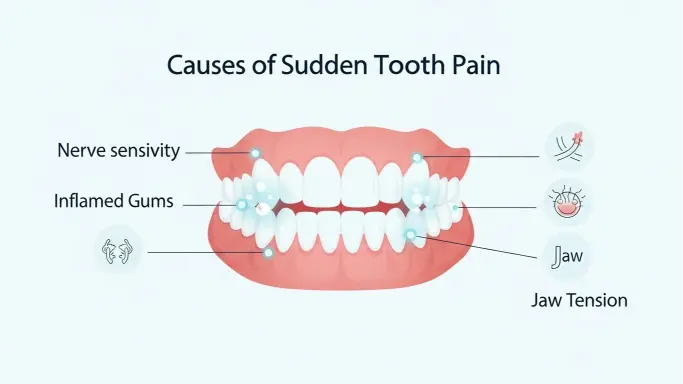
Sudden bottom teeth pain almost always has a trigger, even if it isn’t obvious right away.
Most causes fall into three categories: tooth-related, gum-related, or referred pain from somewhere else in the body.
Knowing which category your pain falls into can help you decide how urgently you need to act.
The table below gives you a fast snapshot before we go deeper into each individual cause and what it feels like.
| Possible Cause | Type of Pain | Common Trigger |
|---|---|---|
| Teeth grinding (bruxism) | Dull ache, soreness on waking | Stress, sleep clenching |
| Cavities (tooth decay) | Sharp, sudden pain when biting | Sugar, poor hygiene |
| Gum recession | Sharp cold/hot sensitivity | Aggressive brushing, aging |
| Cracked tooth | Sharp pain on release of bite | Chewing hard food, trauma |
| Root infection/abscess | Throbbing, radiating pain | Untreated decay |
| Gum disease | Tender, bleeding gums | Plaque buildup |
| Sinus infection | Achy pain in multiple teeth | Cold, allergies, congestion |
| Recent dental work | Mild lingering sensitivity | Fillings, cleanings |
Teeth Grinding (Bruxism)
Many people grind or clench their teeth at night without realizing it, often during stressful periods.
This habit puts intense pressure on the lower teeth, since they take the brunt of the contact when the jaw closes.
Over time, grinding wears down enamel and can make your bottom front teeth ache the moment you wake up.
If you notice jaw soreness or headaches along with the tooth pain, bruxism is a likely culprit worth mentioning to your dentist.
Dental Cavities (Tooth Decay)
A cavity doesn’t always hurt until the decay reaches the deeper layers of the tooth.
Once it does, the pain can appear suddenly and feel sharp when you bite down or eat something sweet.
Lower molars are especially prone to decay because food particles collect on their chewing surfaces and are harder to clean thoroughly.
Ignoring a cavity allows it to spread closer to the nerve, which makes the pain worse over time and increases the chance you’ll need a root canal.
Gum Recession
When gums pull away from the teeth, the roots underneath become exposed.
Roots don’t have the same protective enamel as the crown, so they react strongly to hot, cold, or sweet foods.
Gum recession often develops slowly, which is why the sensitivity seems to come out of nowhere.
Brushing too hard or long-term gum disease are the two biggest reasons this happens.
Cracked or Fractured Tooth
A tiny hairline crack is often invisible to the naked eye but can still cause real pain.
You may feel a sharp twinge when you bite down and then release pressure, especially on lower back teeth.
Cracks let temperature and bacteria reach the sensitive inner layers of the tooth.
Left untreated, a small crack can worsen and eventually expose the nerve completely.
Root Infection or Abscess
An abscess is a pocket of infection that forms at the root of a tooth.
It typically causes intense, throbbing pain that can spread to the jaw, ear, or nearby teeth.
Swollen gums, a bad taste in the mouth, or facial swelling often accompany an abscess.
This is considered a dental emergency and needs prompt treatment to prevent the infection from spreading.
Gum Disease (Gingivitis and Periodontitis)
Early gum disease, called gingivitis, causes red, swollen gums that bleed easily during brushing.
If it isn’t treated, it can progress to periodontitis, where the infection reaches deeper tissue and even bone.
Bottom teeth often feel tender or loose as the supporting structures weaken.
Regular cleanings and good hygiene are the best defense against gum disease.
Sinus Infection
It may sound strange, but a sinus infection can cause tooth pain, even in the lower jaw.
Pressure and inflammation in the sinus cavities can radiate down through facial nerves.
This kind of pain usually affects several teeth at once rather than just one.
If you also have nasal congestion or facial pressure, your sinuses may be the real source.
Recent Dental Work
Fillings, cleanings, or other procedures can leave teeth feeling sensitive for a short period afterward.
This is a normal healing response and typically fades within a few days to two weeks.
If the sensitivity lingers much longer or gets worse, it’s worth mentioning to your dentist.
Sometimes a filling sits slightly too high, which creates extra pressure and discomfort when biting.
Teeth Whitening Sensitivity
Whitening strips and gels use peroxide-based ingredients that temporarily dehydrate the enamel.
This process can leave your bottom front teeth feeling raw or unusually sensitive.
The discomfort is usually short-lived and resolves once you pause whitening treatments.
Using a sensitivity toothpaste during and after whitening can help ease the reaction.
Acidic Foods and Enamel Erosion
Soda, citrus fruits, wine, and even certain medications are highly acidic and wear down enamel over time.
Once enamel thins enough, the dentin underneath becomes exposed to temperature and pressure.
This erosion happens gradually, so the pain often feels like it appeared overnight.
Cutting back on acidic foods and rinsing your mouth with water afterward can slow the damage.
Poor Oral Hygiene and Plaque Buildup
Skipping brushing or flossing allows plaque to build up along the gumline.
Over time, this plaque hardens into tartar, which irritates gums and contributes to sensitivity.
Bottom front teeth are especially prone to buildup since saliva doesn’t rinse them as effectively.
Consistent brushing, flossing, and routine cleanings help prevent this cycle from starting.
Aggressive Brushing Technique
Scrubbing too hard with a stiff-bristled toothbrush can damage both enamel and gum tissue.
This habit accelerates gum recession and exposes the sensitive roots of your teeth.
Switching to a soft-bristled brush and gentle circular motions protects your teeth long term.
If your gums look thin or teeth feel “raw,” your brushing technique may be the reason.
Cold Weather and Temperature Sensitivity
Breathing in cold air can trigger sharp pain in teeth with exposed dentin.
This is why some people notice their bottom teeth hurting more during winter months.
Hot drinks like coffee can cause a similar, sudden jolt of pain in sensitive teeth.
A desensitizing toothpaste can reduce this reaction over a few weeks of regular use.
Trapped Food or Emerging Wisdom Teeth
A small piece of food, like a popcorn kernel, can wedge between the gum and tooth.
This trapped debris irritates the tissue and can cause sudden, localized soreness.
Emerging lower wisdom teeth can also push against nearby teeth and cause pressure-related pain.
Gently flossing the area or rinsing with warm salt water often provides quick relief.
Referred Pain From Other Health Issues

Not all tooth pain actually starts in the tooth itself.
Conditions like sinus infections, cluster headaches, or even certain heart issues can cause pain that feels like it’s coming from your lower teeth.
This is known as referred pain, and it can be confusing to diagnose without a professional exam.
If your bottom teeth hurt but a dentist finds nothing wrong, it may be worth ruling out non-dental causes.
Symptom Checklist: Matching Pain to Possible Cause
Use this quick checklist to get a general idea of what might be happening before your dental visit.
| Symptom | Likely Cause |
|---|---|
| Pain only with cold or hot foods | Gum recession, enamel erosion |
| Sharp pain when biting down | Cavity or cracked tooth |
| Throbbing pain with swelling | Abscess or infection |
| Soreness after waking up | Teeth grinding |
| Multiple teeth ache with congestion | Sinus infection |
| Bleeding, tender gums | Gum disease |
Home Remedies for Temporary Relief
A warm saltwater rinse can gently clean the area and calm irritated gum tissue.
A cold compress against your cheek may help numb sharp, sudden pain, especially if there is swelling.
Over-the-counter pain relievers like ibuprofen can reduce discomfort while you arrange a dental visit.
Sticking to soft foods and avoiding extreme temperatures gives your teeth a chance to settle down.
Chewing on the opposite side of your mouth can also prevent further irritation to the sore tooth while you wait for treatment.
When to See a Dentist
Occasional mild sensitivity isn’t always an emergency, but certain signs mean you shouldn’t wait.
Pain lasting more than 48 hours deserves a professional evaluation.
Swelling, fever, or a visible pimple-like bump on the gum can signal an abscess that needs urgent care.
If chewing becomes painful or a tooth feels loose, book an appointment as soon as possible.
How to Prevent Sudden Bottom Teeth Pain
Brush twice daily with a fluoride toothpaste and a soft-bristled brush to protect enamel.
Floss daily to remove plaque from areas your toothbrush can’t reach.
Wear a night guard if you grind or clench your teeth while sleeping.
Limit acidic and sugary foods, and schedule regular dental checkups to catch problems early.
How Dentists Diagnose Sudden Bottom Teeth Pain
A dentist starts with a visual exam, checking for visible decay, cracks, or gum recession.
X-rays are often used to spot hidden cavities, bone loss, or infection near the tooth root.
They may also test each tooth’s response to hot, cold, or gentle tapping to isolate the problem.
If nothing dental is found, you may be referred to check for sinus or nerve-related causes.
Foods and Drinks That Can Trigger Bottom Teeth Pain
Certain foods make existing sensitivity feel far worse, especially right after it starts.
Ice-cold drinks and frozen desserts often trigger a sharp, sudden zing in exposed teeth.
Sticky candies and sugary snacks feed the bacteria that cause cavities and gum irritation.
Citrus fruits, soda, and vinegar-based foods are acidic enough to speed up enamel erosion.
| Food or Drink | Why It Triggers Pain |
|---|---|
| Ice water or ice cream | Sudden temperature shock on exposed dentin |
| Coffee or tea | Heat sensitivity and staining that weakens enamel |
| Citrus fruits | High acidity erodes enamel over time |
| Soda and energy drinks | Acid and sugar combined accelerate decay |
| Hard candy or ice chewing | Physical stress that can crack teeth |
Bottom Teeth Pain in Children vs Adults
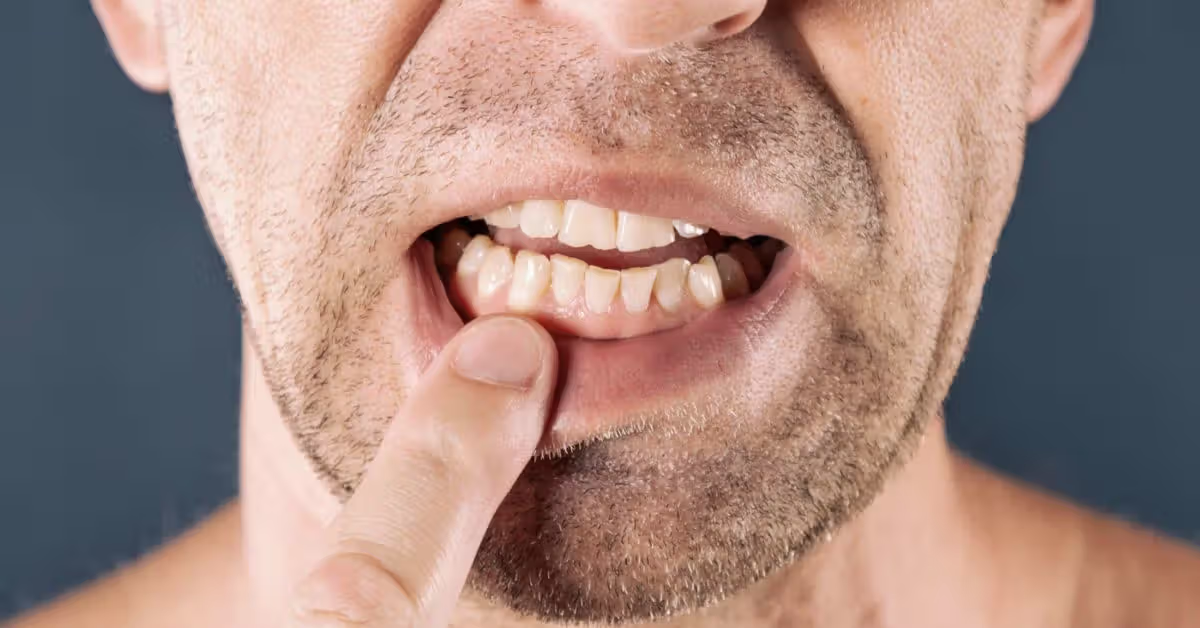
In children, sudden lower tooth pain is often linked to a new cavity or a loose baby tooth.
Kids may also grind their teeth during growth spurts or periods of stress, similar to adults.
In adults, the more common causes shift toward gum recession, enamel wear, and long-term grinding habits.
Regardless of age, persistent pain lasting more than a day or two should always be checked by a dentist.
Products That Can Help With Sensitive Bottom Teeth
Desensitizing toothpaste is usually the first line of defense for mild, ongoing sensitivity.
A custom-fitted night guard protects against pressure from grinding and clenching while you sleep.
Soft-bristled toothbrushes reduce the risk of further gum recession from aggressive brushing.
Fluoride mouth rinses can strengthen weakened enamel and reduce the chance of future pain.
| Product | Best For |
|---|---|
| Desensitizing toothpaste | Cold and hot sensitivity |
| Night guard | Grinding and clenching pain |
| Soft-bristled toothbrush | Preventing gum recession |
| Fluoride rinse | Strengthening weak enamel |
| Soft-food diet | Recovery after dental work |
Do’s and Don’ts While Your Bottom Teeth Are Hurting
Knowing what to avoid is just as important as knowing what helps while you wait for treatment.
Small mistakes, like chewing on the painful side or skipping oral care altogether, can make things worse.
The quick reference table below sums up the most helpful actions and the ones to steer clear of.
| Do | Don’t |
|---|---|
| Rinse with warm salt water | Skip brushing the sore area completely |
| Use a soft-bristled toothbrush | Scrub hard near the painful tooth |
| Take OTC pain relief as directed | Apply aspirin directly on the gum |
| Eat soft, room-temperature foods | Chew ice or very hard foods |
| Book a dental appointment promptly | Wait weeks hoping it resolves on its own |
Is Bottom Teeth Pain Ever Linked to Jaw Problems (TMJ)?
The temporomandibular joint connects your jawbone to your skull and controls chewing and speaking.
When this joint becomes inflamed or misaligned, the pain can radiate into the lower teeth and feel like a toothache.
Clicking or popping sounds when you open your mouth, along with jaw fatigue, are common signs of TMJ-related pain.
A dentist can often distinguish TMJ pain from a true toothache through a simple bite and jaw movement exam.
Warning Signs That Point to a Dental Emergency
Not every ache needs an emergency visit, but a few red flags change that quickly.
Facial swelling that spreads toward your eye or neck can signal a spreading infection.
A fever alongside tooth pain suggests your body is fighting an active infection that needs antibiotics.
Difficulty swallowing or opening your mouth fully is a sign to seek urgent dental or medical care right away.
Can Anxiety or Stress Make Bottom Teeth Pain Worse?
High stress levels are closely linked to teeth grinding, jaw clenching, and even changes in how you perceive pain.
During stressful periods, people often clench their jaw without noticing, adding constant pressure to the lower teeth.
This tension can also tighten the surrounding jaw muscles, making existing tooth pain feel more intense than it actually is.
Managing stress through relaxation techniques, along with a night guard, can reduce how often this pain flares up.
The good news is that once you identify the real trigger behind your bottom teeth pain, treatment is usually straightforward. Many of the causes listed above, from grinding to mild enamel wear, respond well to simple lifestyle changes and the right dental products.
Others, like an abscess or deep cavity, need a dentist’s intervention to fully resolve. Either way, tracking exactly when the pain started and what makes it better or worse gives your dentist valuable clues during your visit.
Frequently Asked Questions (FAQs)
Why do my bottom teeth hurt all of a sudden but my top teeth feel fine?
Lower teeth often bear more pressure from grinding and decay. Localized pain usually points to a specific tooth issue rather than a body-wide problem.
Can stress cause my bottom teeth to hurt?
Yes, stress often leads to unconscious teeth grinding or jaw clenching. This puts extra pressure on your lower teeth, especially overnight.
Is sudden bottom teeth pain always a sign of a cavity?
No, it can also be caused by grinding, gum recession, sinus pressure, or a cracked tooth. A dentist can confirm the exact cause.
Why do my bottom teeth hurt when I drink cold water?
Cold sensitivity usually means exposed dentin from enamel erosion or receding gums. It can also indicate a small crack in the tooth.
Can a sinus infection really cause bottom teeth pain?
Yes, sinus pressure can radiate through facial nerves and affect the lower jaw. This is more common with upper teeth but can spread downward too.
How long does bottom teeth sensitivity last after a filling?
Mild sensitivity after a filling typically fades within one to two weeks. If it continues longer, contact your dentist to check the bite alignment.
Should I be worried if only one bottom tooth hurts?
A single aching tooth often points to a cavity, crack, or infection in that specific tooth. It’s best to get it checked rather than wait it out.
Can grinding my teeth at night really cause sudden pain?
Yes, nightly grinding wears enamel and stresses the tooth roots over time. The pain often shows up first thing in the morning.
What home remedy works best for sudden bottom teeth pain?
A warm saltwater rinse combined with an over-the-counter pain reliever offers quick, temporary relief. These are short-term fixes, not permanent solutions.
When should I treat bottom teeth pain as a dental emergency?
Severe swelling, fever, or pain lasting more than two days needs urgent dental attention. These signs often point to an infection that requires prompt treatment.
Conclusion
Sudden bottom teeth pain can feel alarming, but it almost always has an identifiable cause. Whether it’s grinding, a hidden cavity, gum recession, or something as unexpected as a sinus infection, understanding the possible triggers helps you respond the right way instead of panicking.
Mild sensitivity often improves with simple home care, like a saltwater rinse or switching to a soft-bristled toothbrush. Persistent, severe, or worsening pain, however, is your body’s way of asking for professional help.
A dentist can pinpoint the exact cause through an exam and X-rays, then recommend the right treatment before the issue grows more serious. Don’t ignore ongoing discomfort in your lower teeth.
Booking a dental checkup early not only relieves your pain faster but also protects your long-term oral health and saves you from more complicated treatment down the road.